
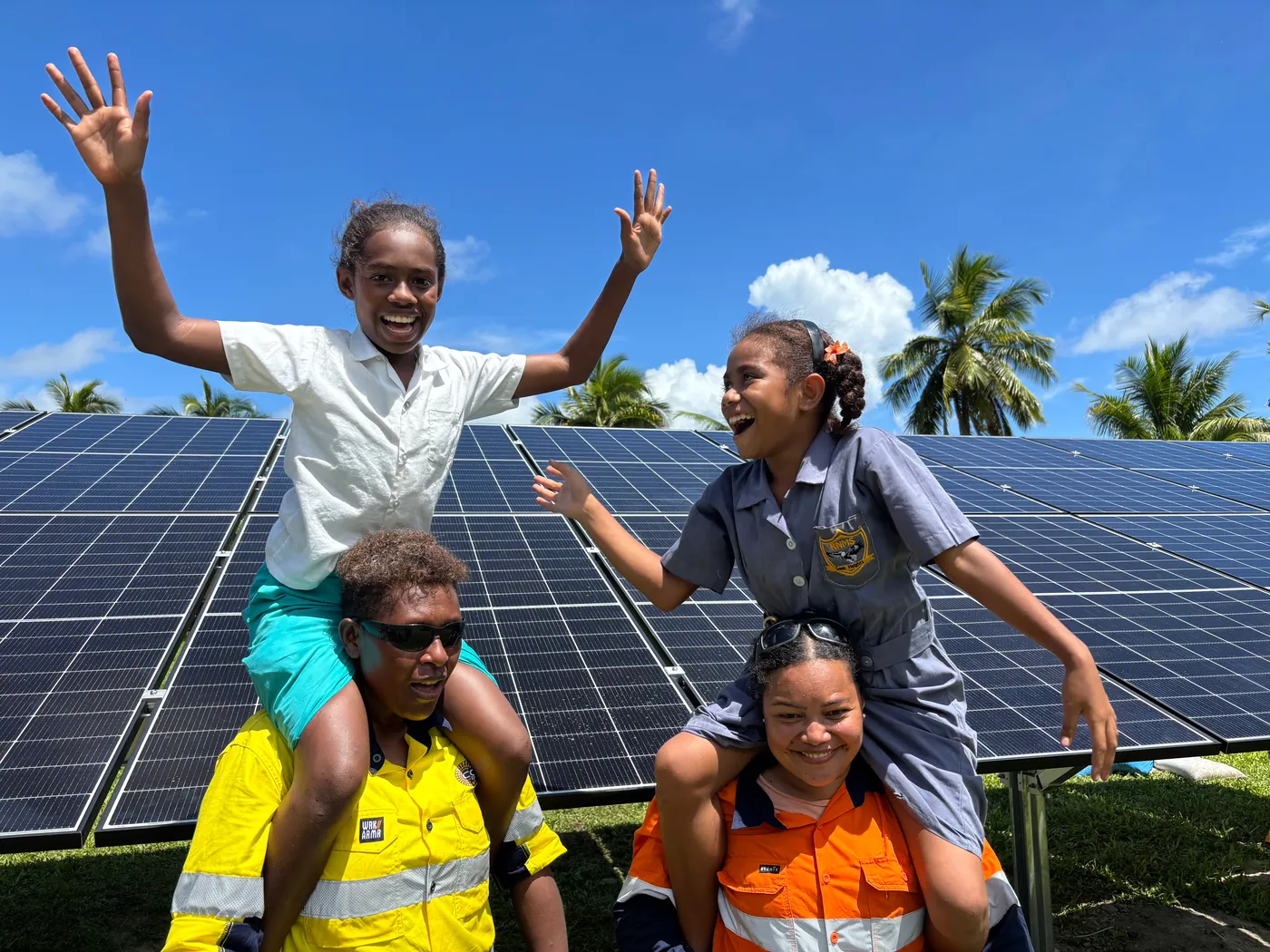
Women in solar
Opening the trades to Pacific women
Training, career pathways and the Pacific’s first all-female solar installation team.
Why it matters
Skills that stay in the islands
Fiji has committed to generating all of its electricity from renewable sources by 2035. That’s a great deal of solar to install, and every system has to be looked after for decades. The people who do that work are mostly men, and on a typical job site a woman on the tools is often the only one there.
Building women’s skills in solar is an ongoing It’s Time Foundation initiative to grow capacity across the region. We encourage schoolgirls and female students to see the industry as a career, give women the field experience they need, and connect them with the women already working in it.
“Our aim is to strengthen visibility, capacity, confidence and leadership pathways for women in an industry where they are traditionally underrepresented.”
2026
The Waya Island project
We’ve encouraged women’s participation in our projects for some years, but 2026 saw us lift it up a gear. In March, twenty women installed a complete solar system at Ratu Naivalu Memorial School on Waya Island, in seven days. It was our first all-women crew, and is believed to be the Pacific’s first.
It wasn’t a one-off. We completed five more projects with all-women or predominantly women crews in 2026.
Read more about the Waya Island project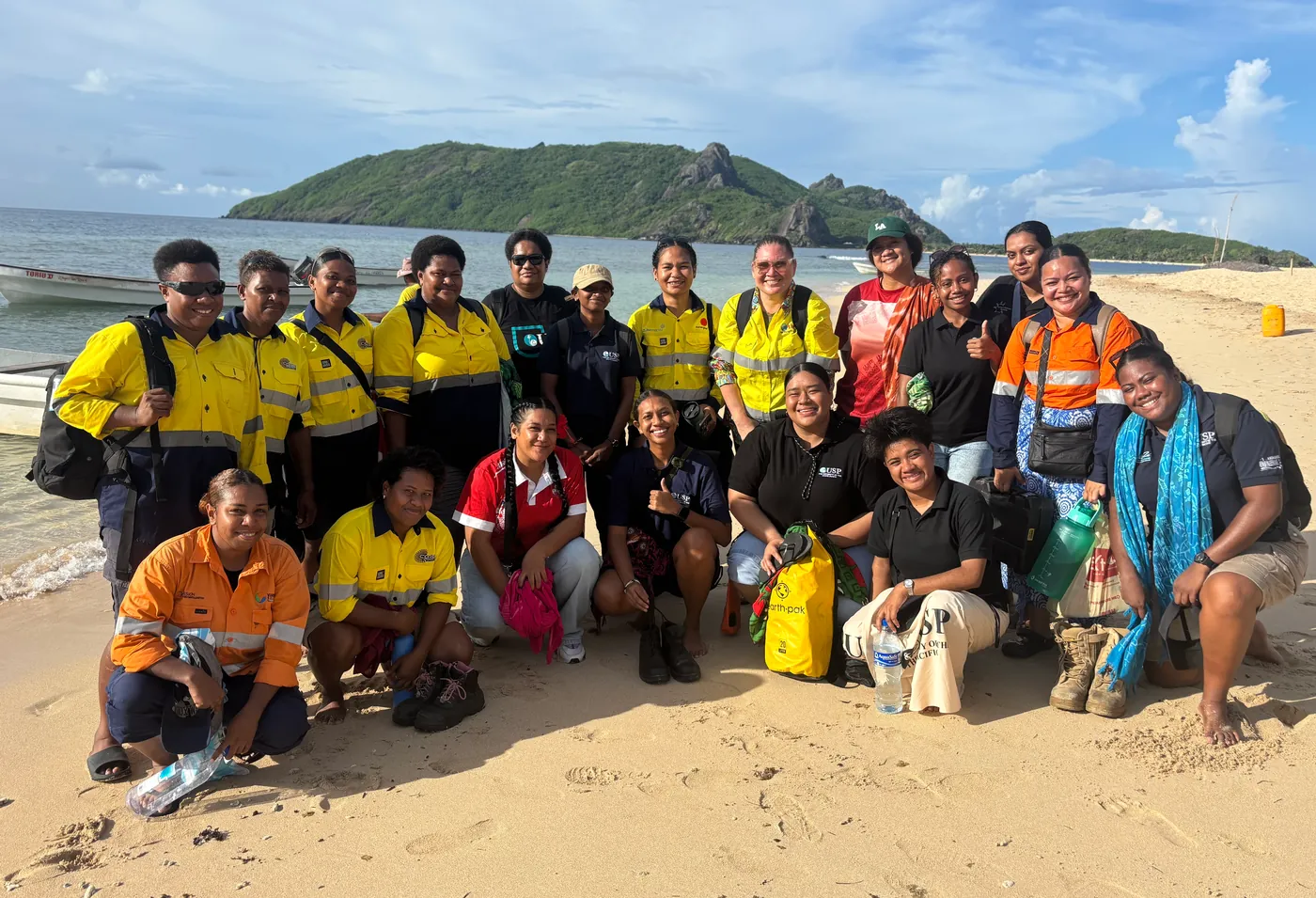
Film
Watch the crew at work
The Pacific’s first all-female solar system installation team · 4:14
Behind the crew
Putting the team together
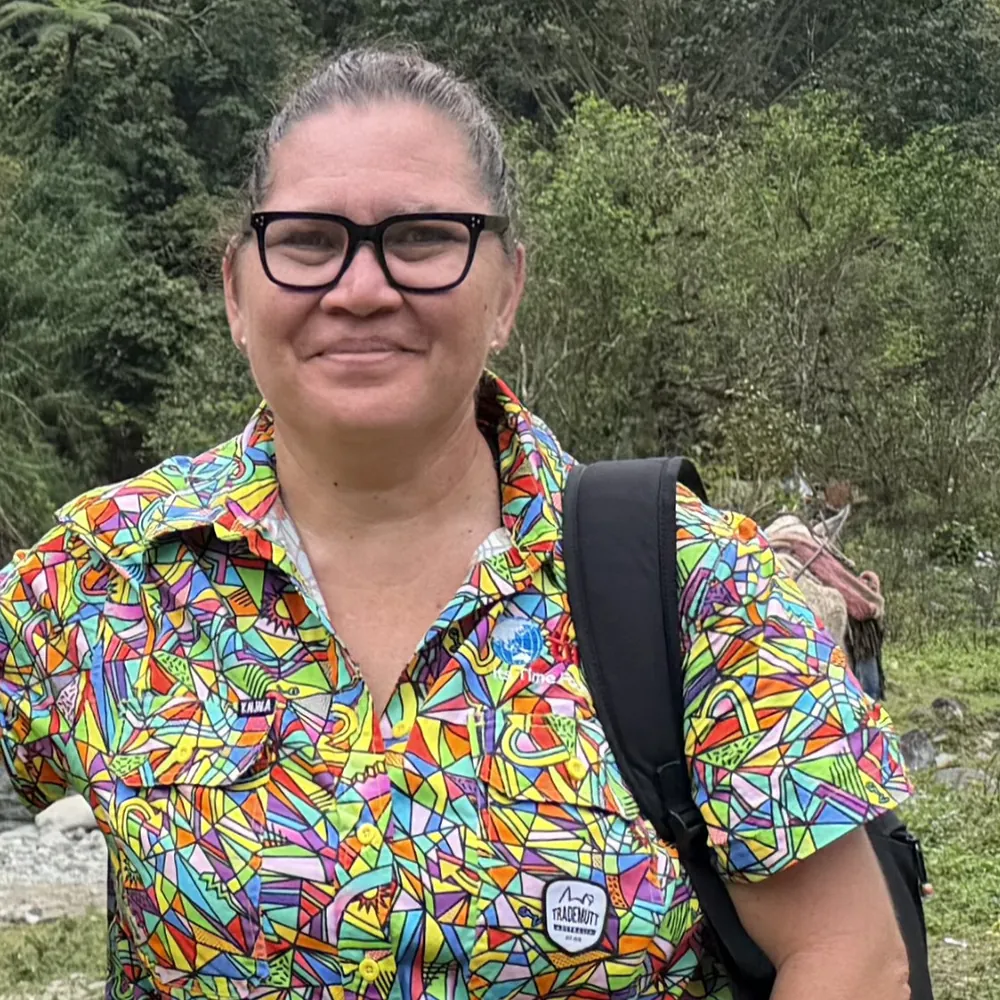
Tamara Smith is It’s Time Foundation’s in-country office manager in Fiji. She helps bring solar power to the rural schools in our REnew Pacific projects, and this year she helped bring together the Waya Island crew: Fiji’s first all-women contractor team.
“If I can help create a future where a girl sees a woman installing solar panels, leading projects and shaping the industry and thinks, ‘I can do that too,’ then I’ve done something that matters.”
Tamara is one of four women profiled in REnew Pacific’s Women in Power series, which celebrates women driving clean energy across the Pacific in the lead-up to COP31.
Read Tamara’s story on REnew Pacific(opens in a new tab)On the tools
Room to learn
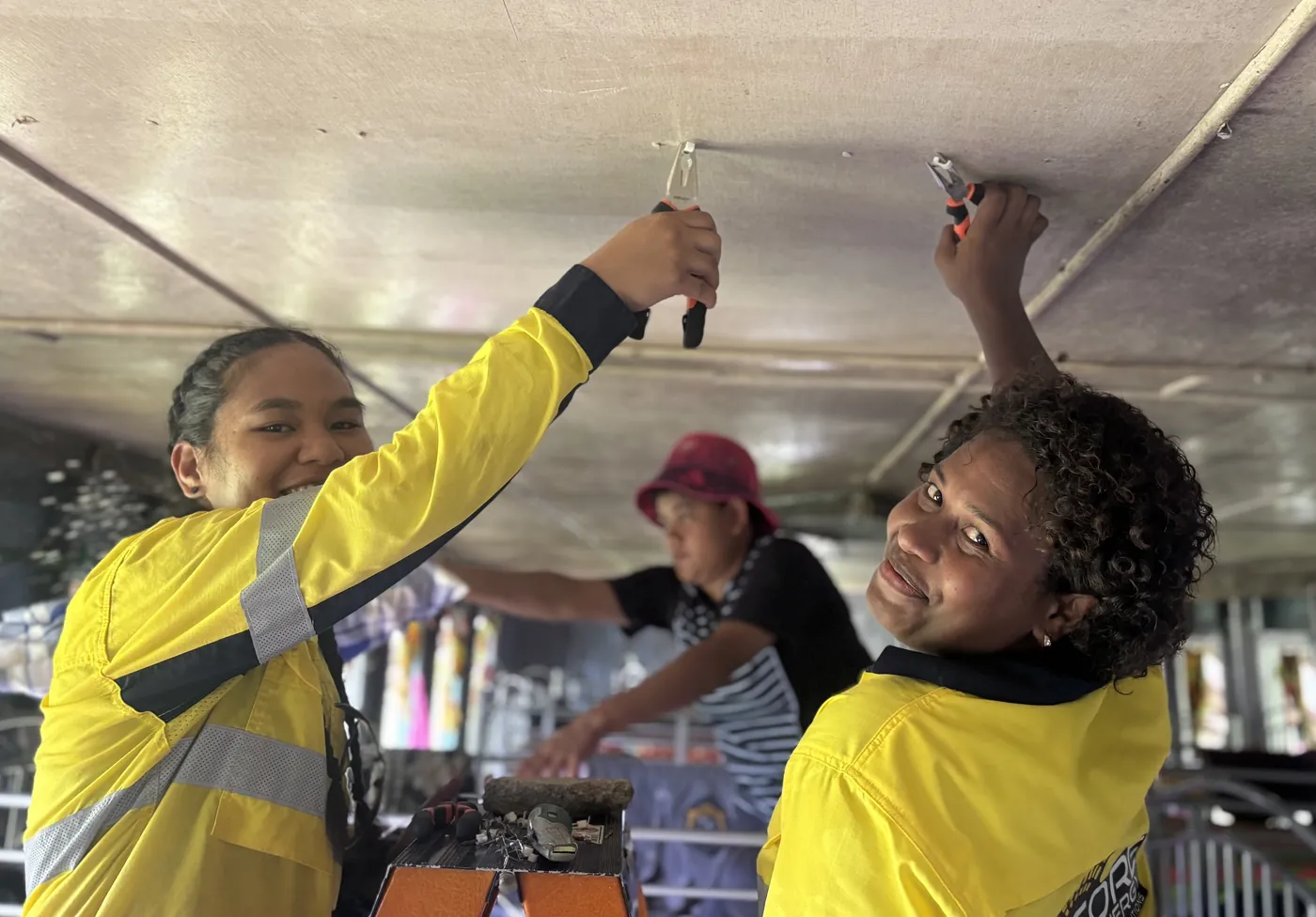
Students from the University of the South Pacific worked side by side with experienced technicians on a live installation – the kind of field experience early-career women seldom get. And on a crew made up entirely of women, nobody was the only woman on site.
“They felt comfortable to be able to make mistakes, to test things, and ask questions.”
What may last longest is the network. As Lauren Hamilton of Australian Women in Solar Energy put it, the women now “have over 20 women they know” in the field. That counts most early in a career, when you may be the only woman at work.
Profile
“The kids even call me ‘Solar’”
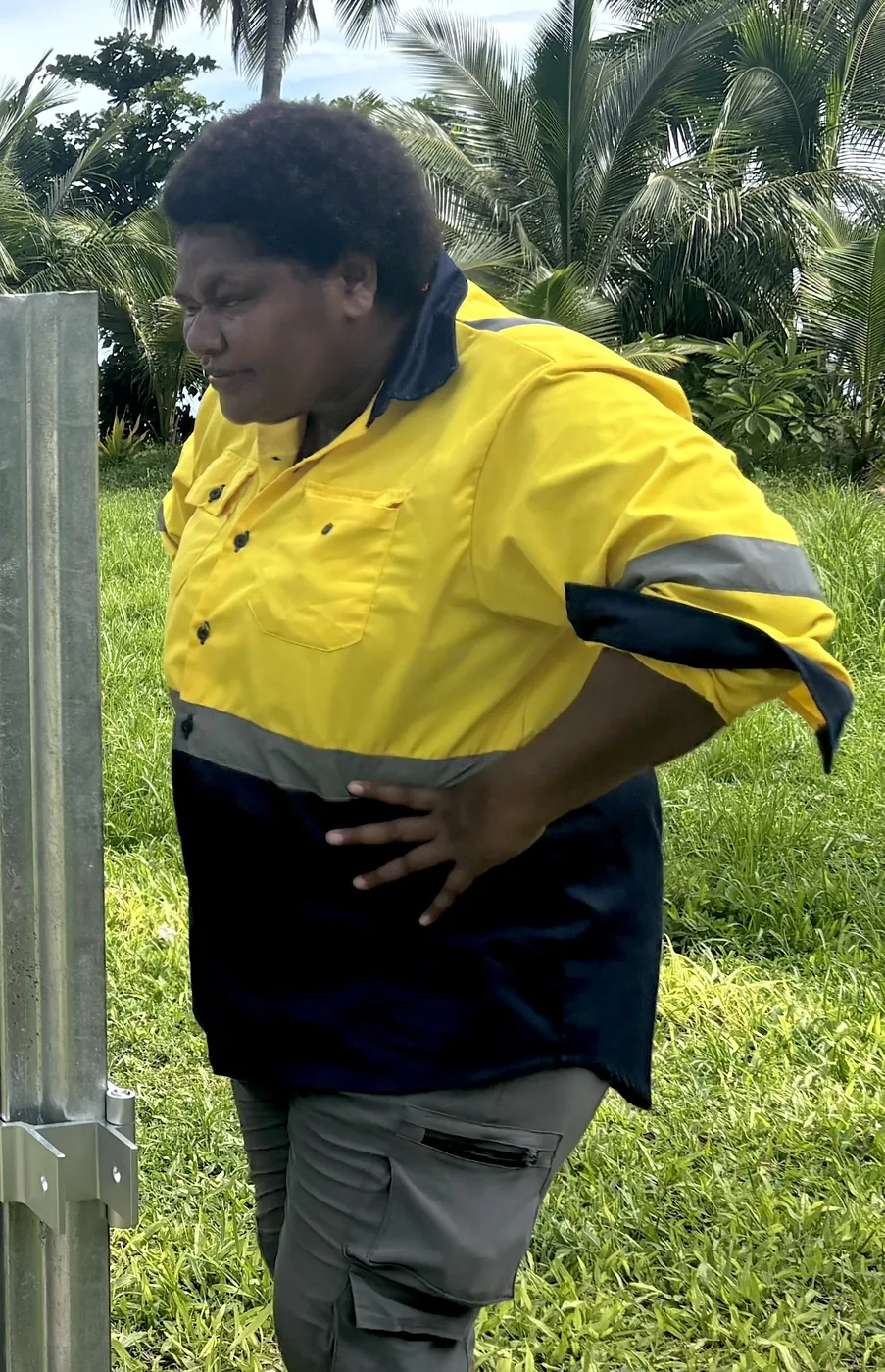
Vasiti Talakubu is a licensed electrician who specialises in solar and renewable energy, and our retained electrical solar contractor. For more than a decade she has been installing solar systems in remote villages across Fiji with It’s Time Foundation. She helped install the system at Buakonikai Primary School on Rabi Island – the pilot that became the blueprint for our REnew Pacific schools.
“I grew up watching most of the girls in my class become teachers or nurses, but I wanted to do something different. I wanted to prove that women belong in this field too.”
For Vasiti, being seen is part of the job.
“I wear my high-vis vest with pride because I want young girls to see that they can do this too. When they see me working, they realise that this isn’t just a job for men.”
Our approach
How we go about it
Role models in the schoolyard
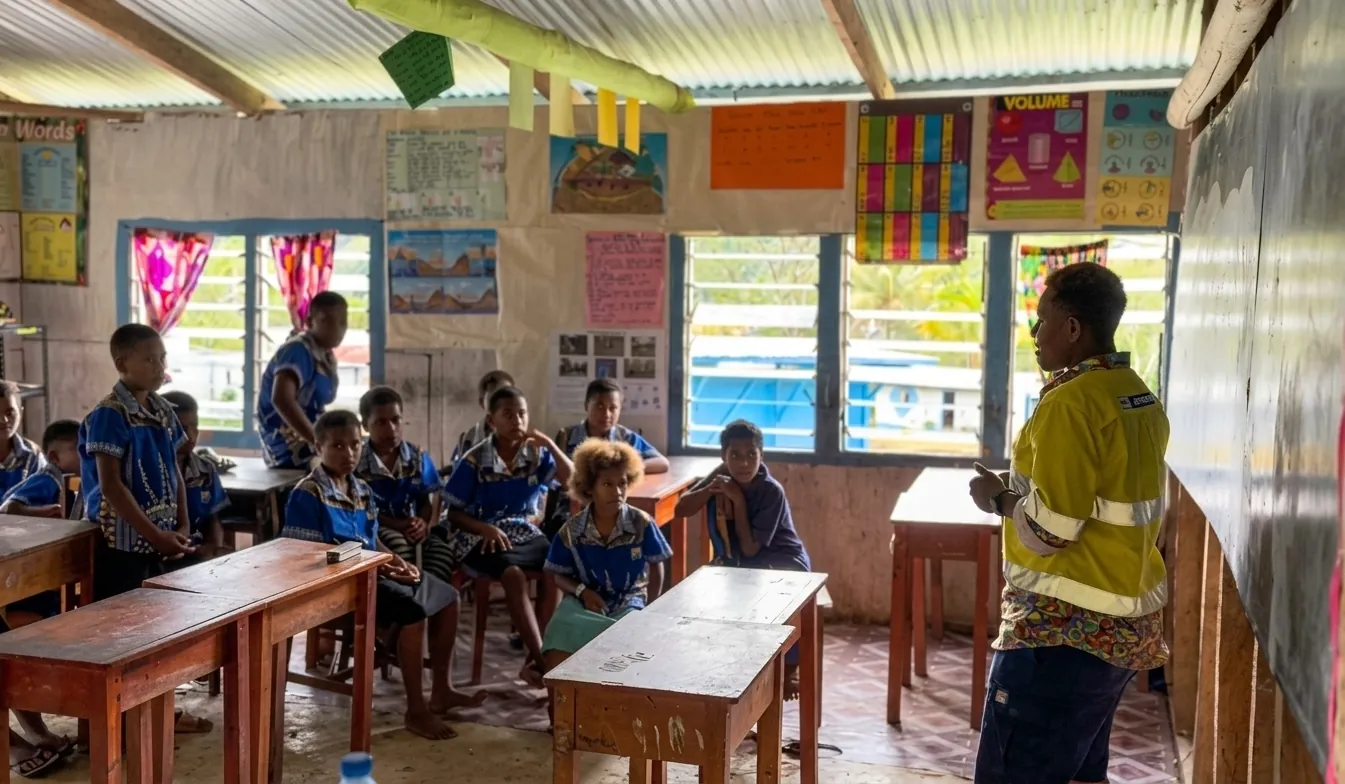
Our installations happen at schools, in front of the students. When girls watch women wire their classrooms, the trade stops looking like a job only for men.
In the classroom
Our team runs “You too can wear hi-vis” sessions with the schoolgirls, encouraging them to picture a career in solar and electrical work.
Time on the tools
We bring women onto real installations alongside experienced technicians. They leave with hours of field experience and a working system they can point to.
Confidence and leadership
Getting into the industry is only the first hurdle. Leadership workshops, like the one that followed Waya Island, tackle what holds women back once they are in it.
A network of peers
We connect women in the trade with each other and with industry bodies, from students to company directors.
Partners
The organisations who helped the Waya Island project happen
What’s next
The next crew
More all-women and predominantly-women crews are planned into 2027.
With around 180 of Fiji’s remote schools still waiting for reliable power, every installation is another chance to put women on the tools. And in our “You too can wear hi-vis” classroom sessions, the girls watching learn that the work could be theirs too.
If your organisation trains, employs or supports women in the solar and electrical trades, we’d like to hear from you.
In the news
Read more
All-women crew helping solar energy push in Pacific
AAP reports on the Waya Island install and why training women could help the Pacific keep the skilled workers it needs.
Women leading the clean energy future
REnew Pacific’s Women in Power series profiles four women driving clean energy in Fiji and Solomon Islands, among them our own Tamara Smith.