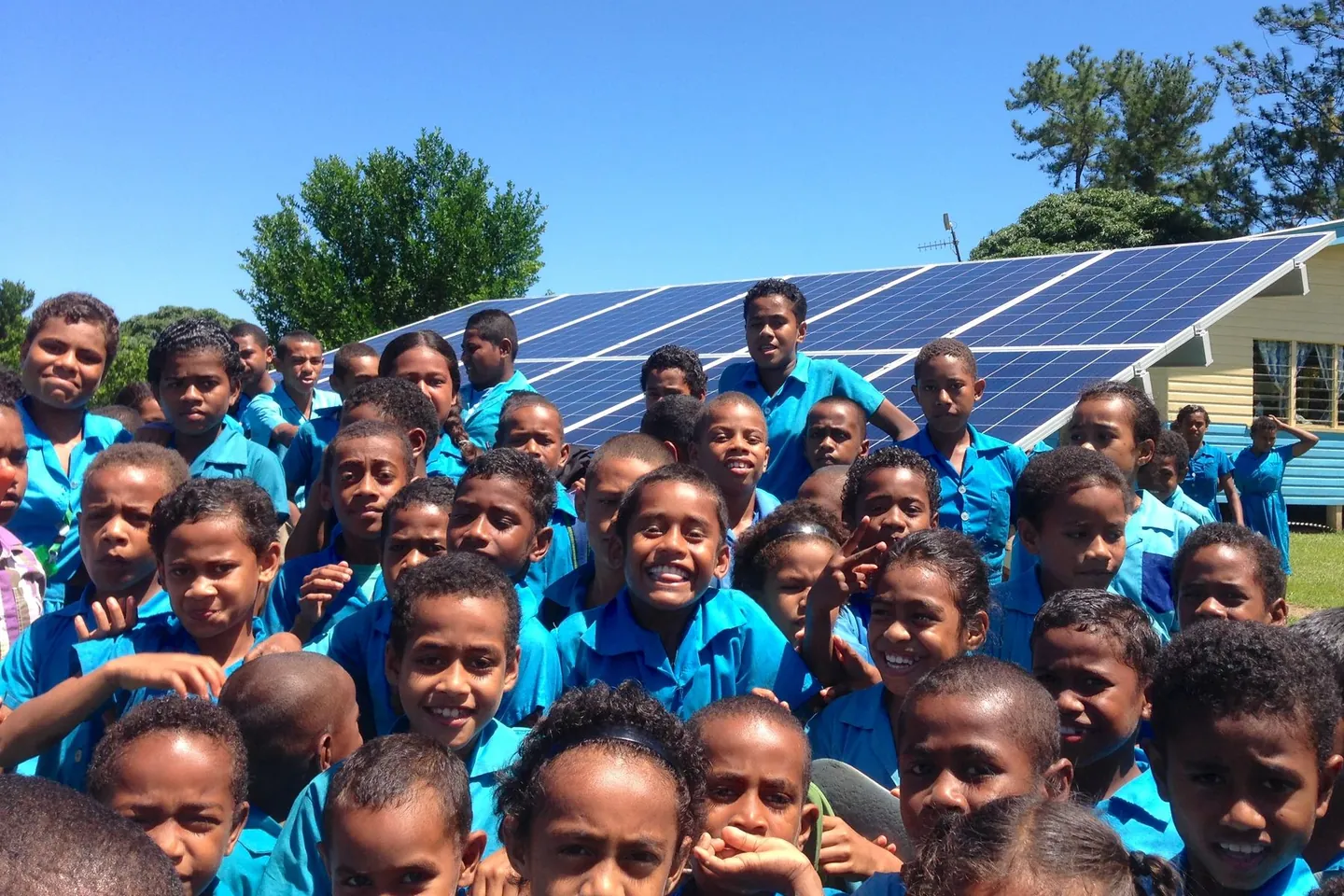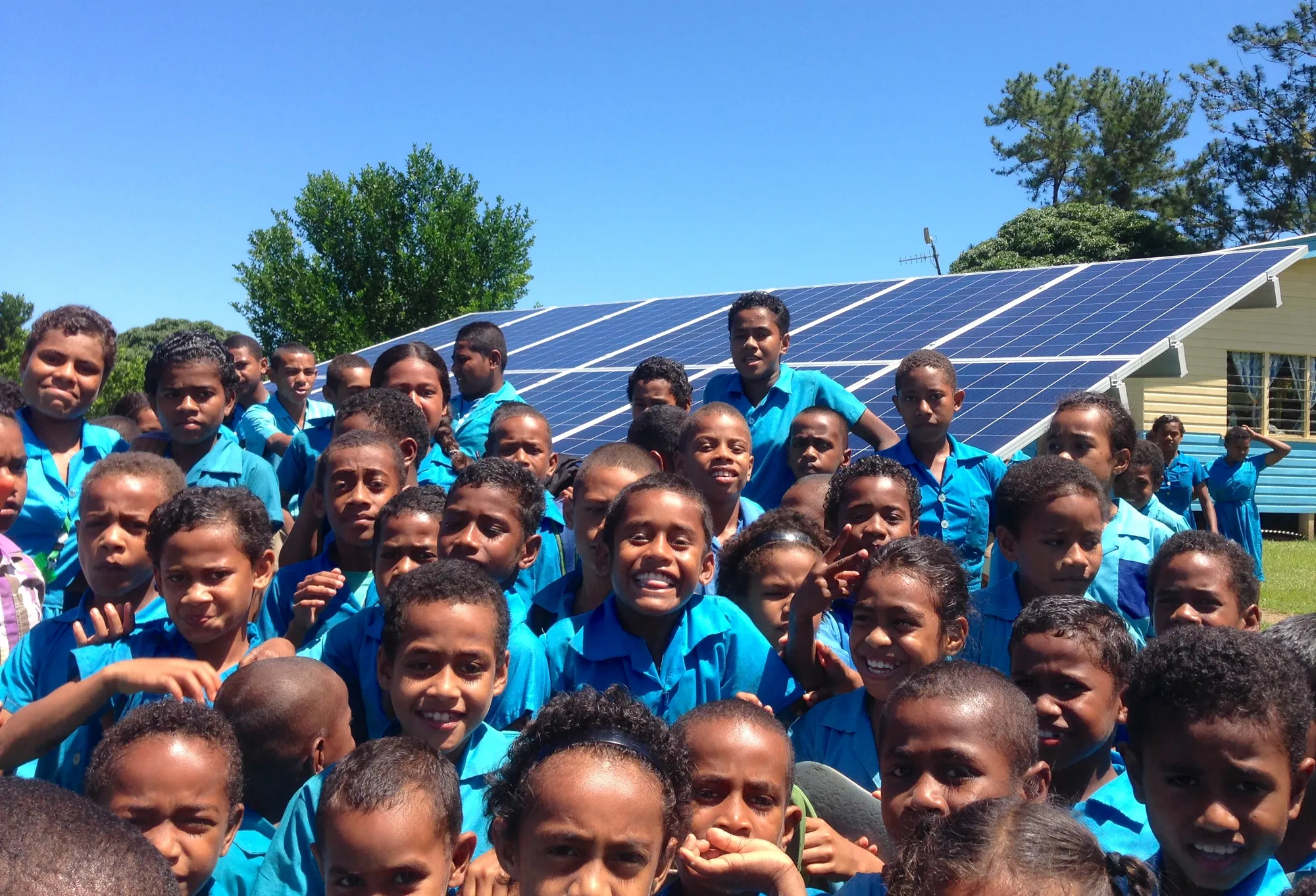
A large group of students in blue uniforms in front of their school's solar array

Our history

Nearly 20 years powering Fiji’s schools

Rob Edwards OAM founded It’s Time Foundation in early 2007. What began with replacing a generator for one school has grown into an engine for generational change.

Before 2007

Before the foundation

Prior to establishing the foundation, Rob spent time working with a not-for-profit, SchoolAid, alongside Sean Gordon. He helped raise A$2.0M to rebuild education facilities in disaster regions – including a new school in Aceh destroyed in the Asian tsunami, the Beslan community in Russia after the 2004 hostage crisis and repairs following cyclone Larry in Queensland, Australia.

They launched the Cool Schools project that provided tools and encouragement to schools in Australia to raise funds with the aim of installing back-to-grid solar systems at their school.

This process showed students that collective small efforts can make a difference in the fight against climate change and inspired Rob to think even bigger…

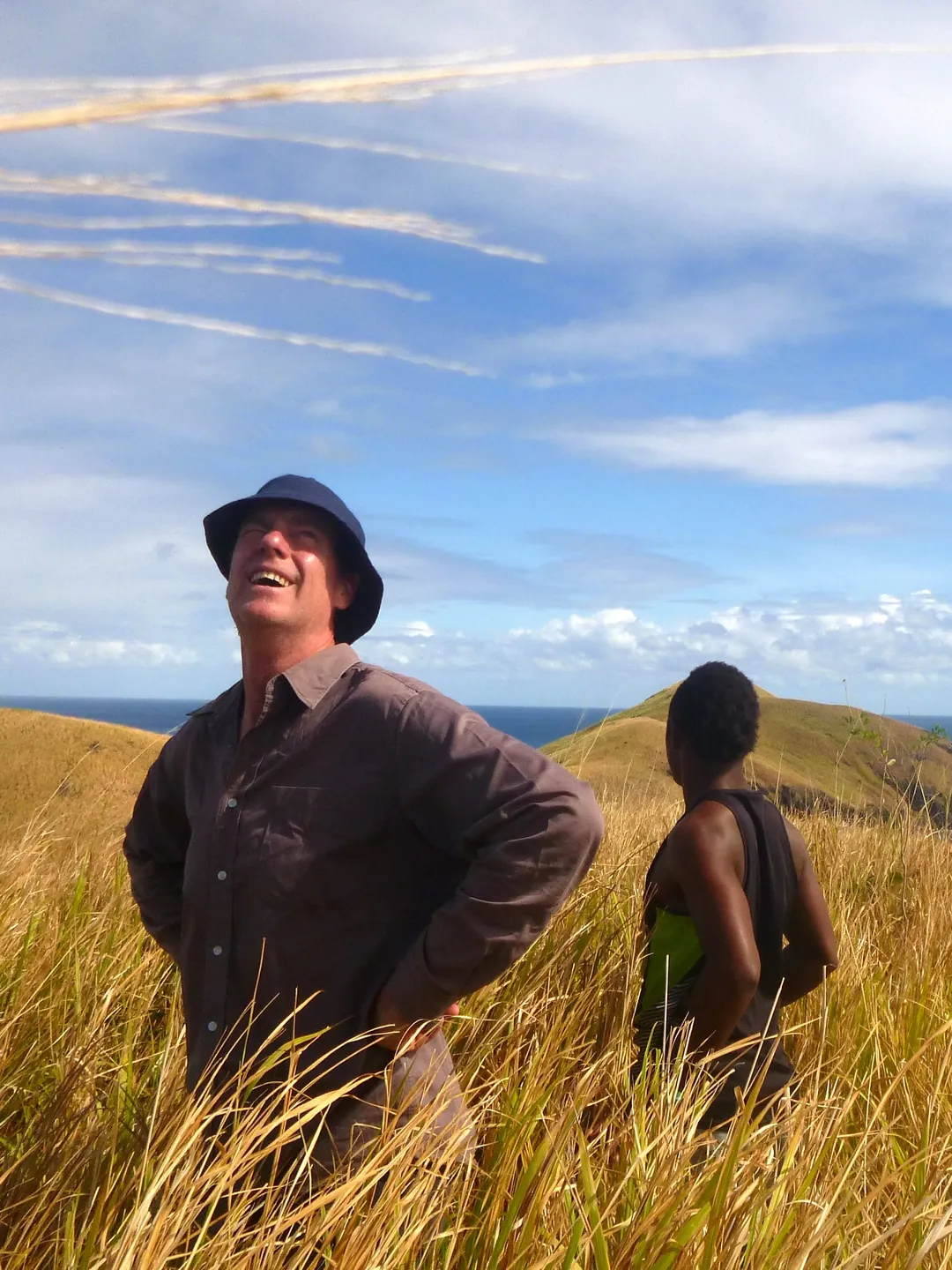
A man in a navy bucket hat laughs as he looks up at the sky, standing in tall golden grass on a headland, a second man beside him looking out over the sea
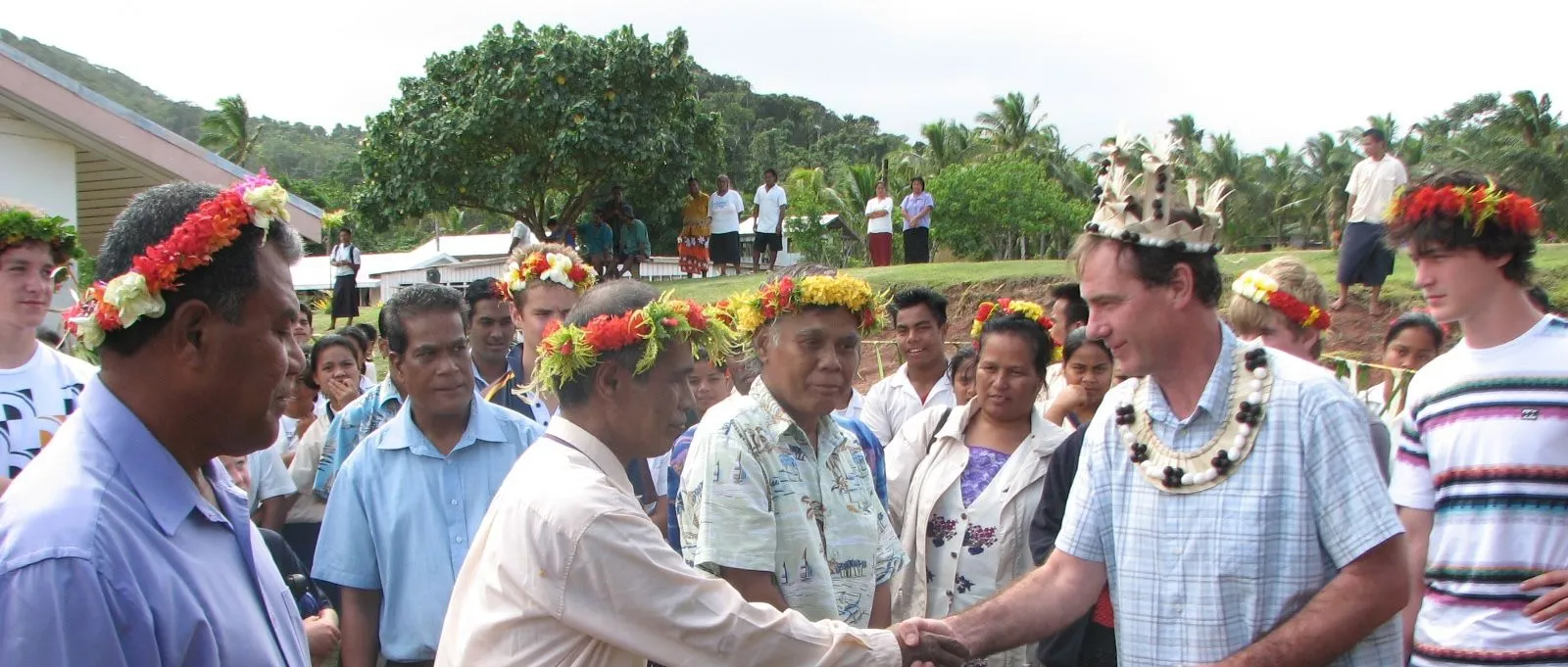
A visitor in a shell crown and garland shakes hands with village elders at a welcome ceremony, a crowd in flower garlands gathered on the hillside behind

Chapter 1, 2007–2008

Beginnings

2007:A generator in Fiji

The moment it started

On a trip in Fiji, Rob and diving buddy Peter Bickerton walked into a school to say good-day. The head teacher was tapping away on an old laptop while a donated generator thundered in the background. He raced outside to switch it off and save fuel.

It seemed a no-brainer: they could be using solar, enjoying free, 24/7 renewable power and putting the fuel savings to use for education resources. The idea was born, and Rob would return to Australia thinking about how to make it happen.
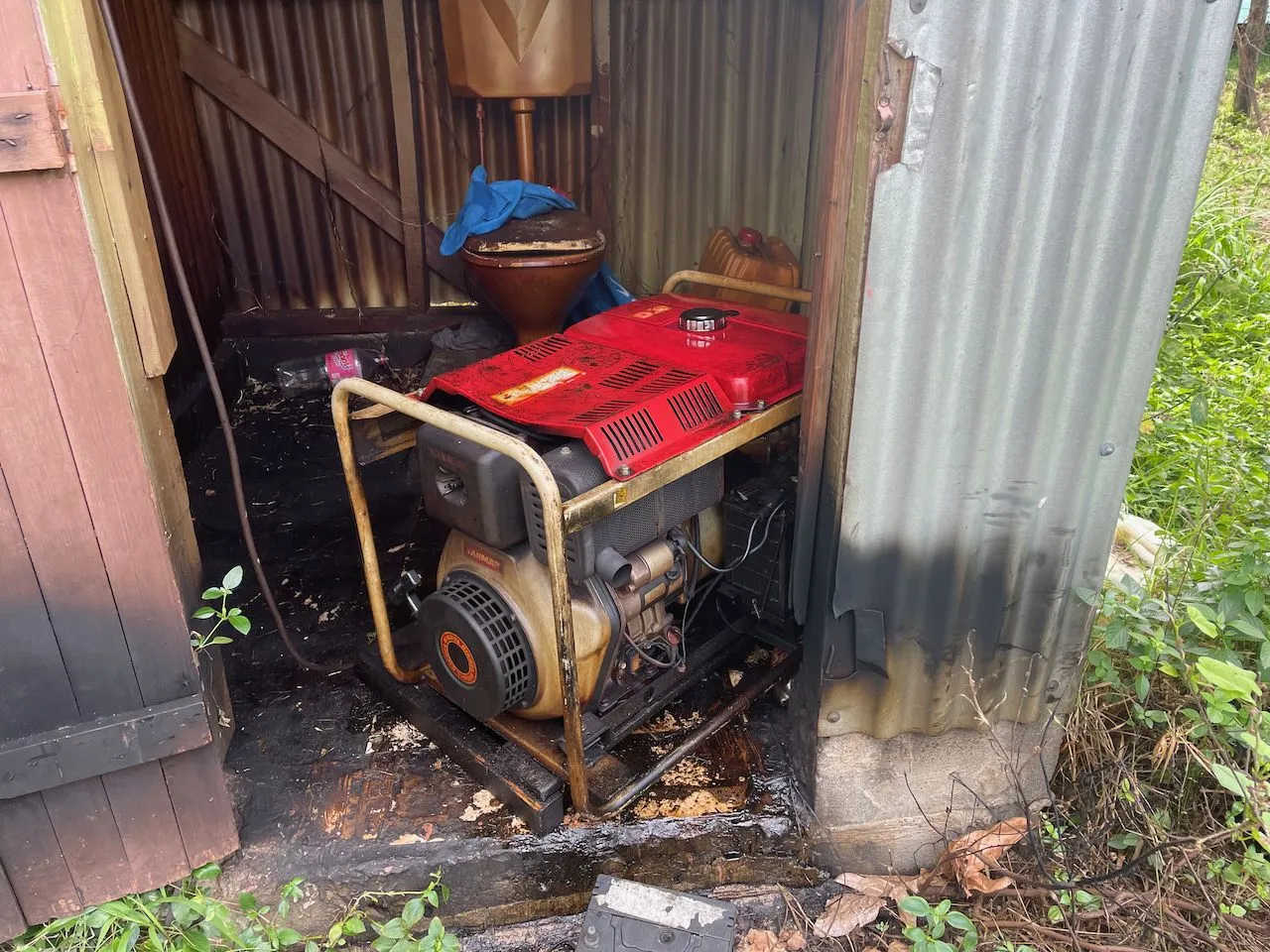
A battered red diesel generator crammed into a corrugated-iron shed, the floor black with spilt oil

2008:Rabi High School, Rabi Island

The pilot

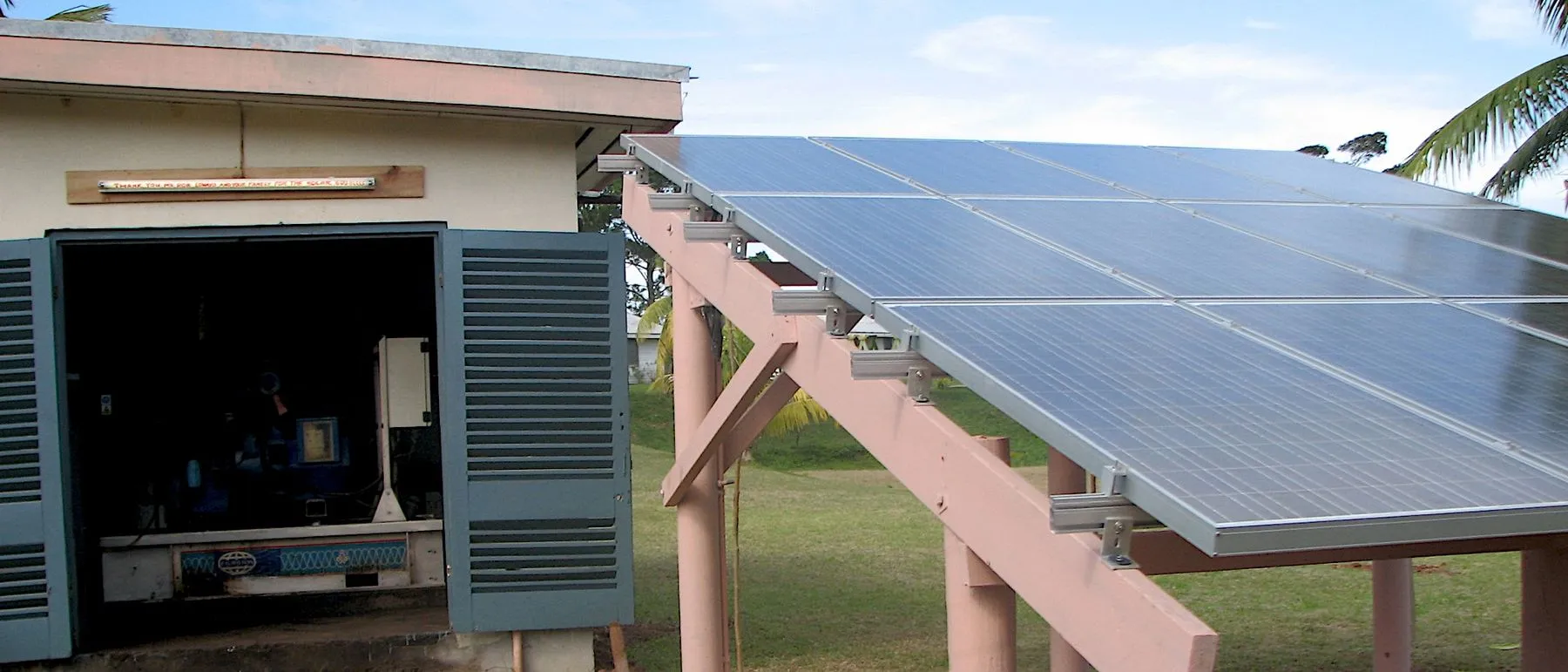
Rows of solar panels on a timber frame beside the school’s generator house, its louvred doors open on the diesel generator inside

Rob had sold his company, Health Futures, and wanted to g something back. The result was a 2 kW system at Rabi High School on Rabi Island. It was underpowered, but it was enough to suggest that a charity might be possible to make this work.

2008:Deductible gift recipient status

Becoming a registered charity

With Peter and Sean on the board, helping steer our direction (and still there today), It’s Time Foundation began to feel like a serious operation. We were granted Deductible Gift Recipient (DGR) status, so donors could now give tax-deductibly. Individuals and Rotary clubs answered the call, and the funds began to build.

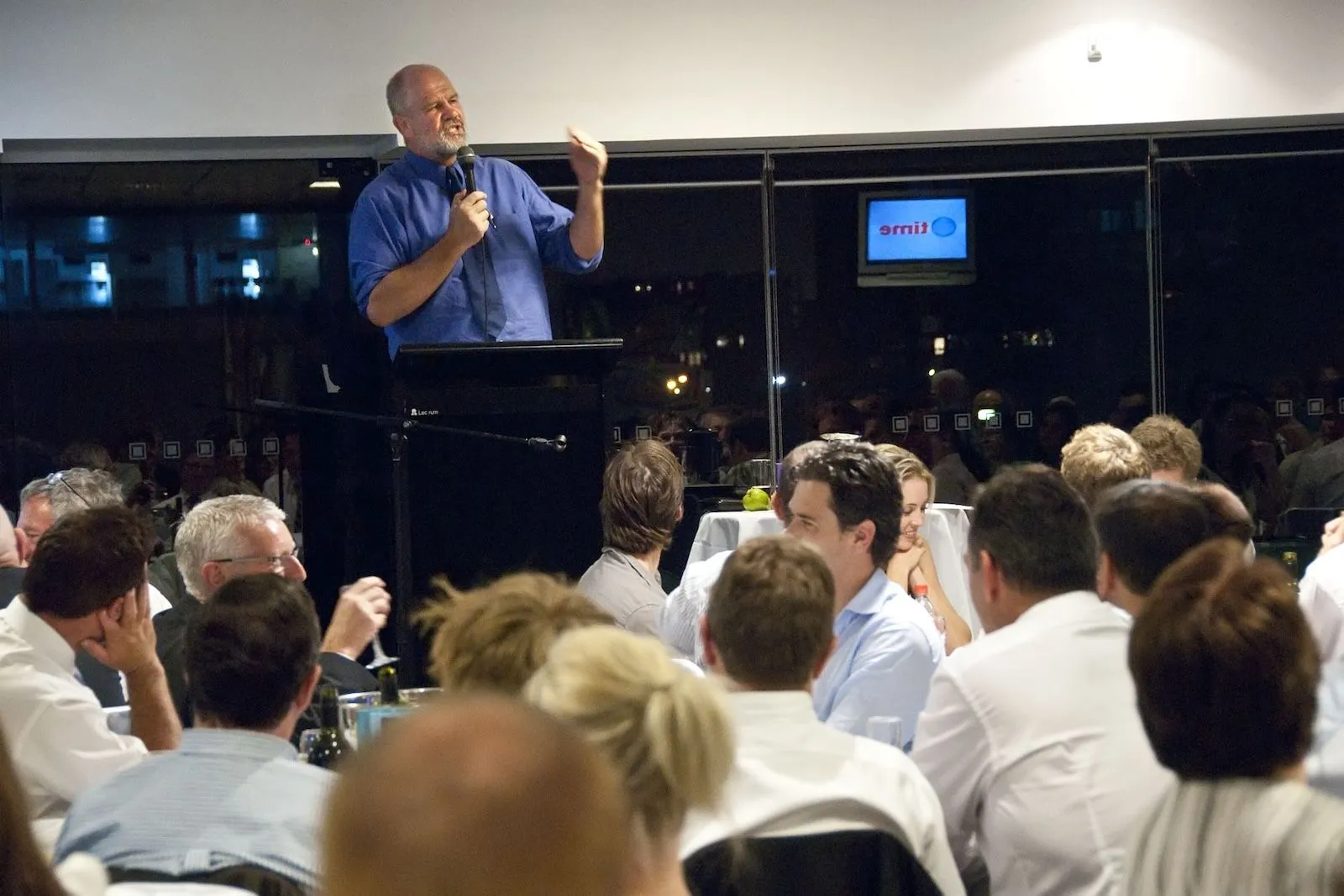
At the Wollongong Entertainment Centre, international rugby players including Peter FitzSimons spoke to 240 guests in a fundraiser that accelerated progress.

A speaker with a microphone addresses a packed fundraising dinner from the lectern, guests seated at tables in the foreground
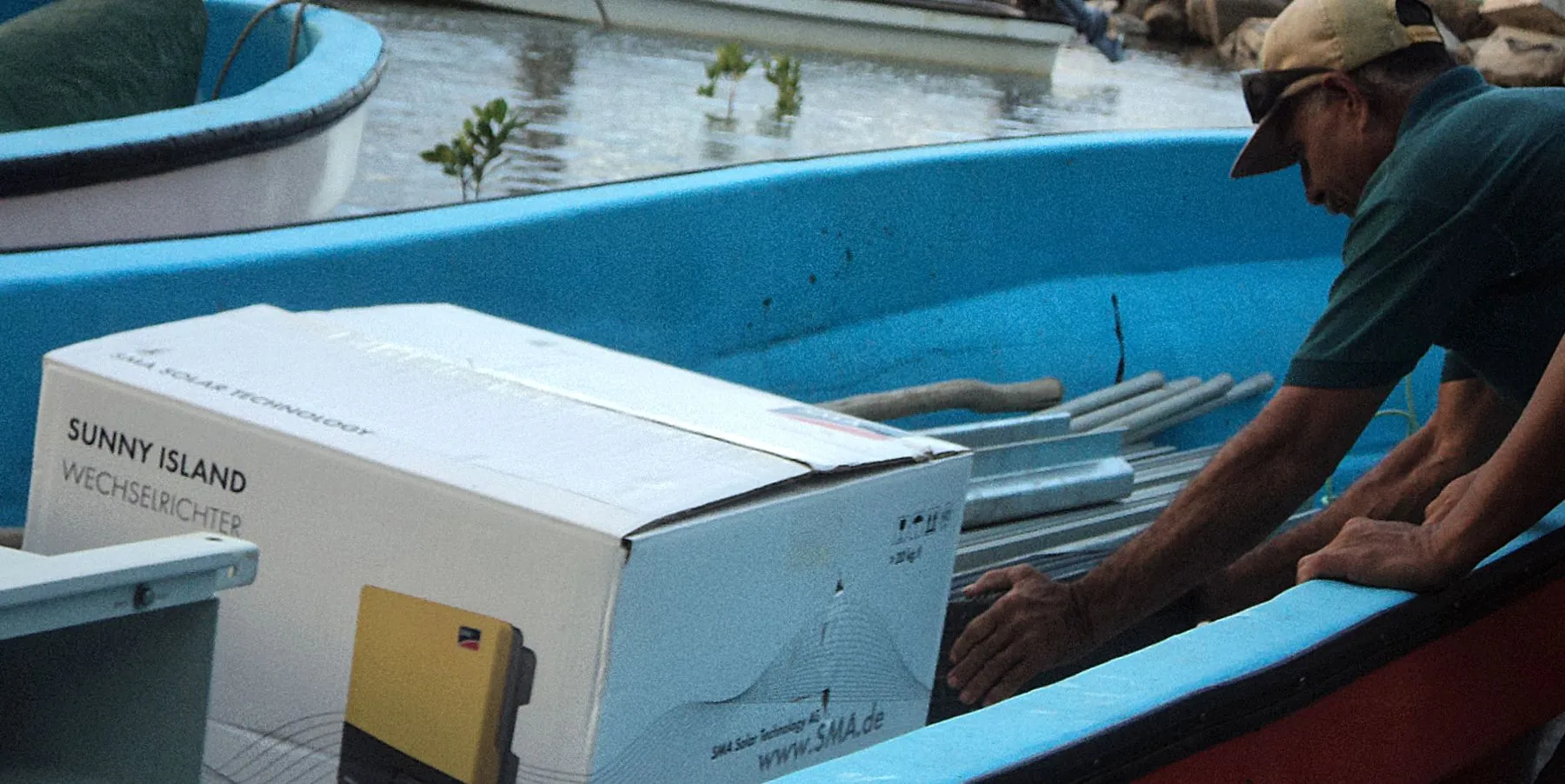
A boxed SMA Sunny Island inverter and lengths of aluminium racking being loaded into a small blue boat

Chapter 2, 2010–2018

Partnerships

2010s:Building and learning

The pre-scaling years

The 2010s were a part-time decade of building and learning.

Our first two projects, on Kioa Island and at Navatu on Vanua Levu, gauged interest in this work and taught us how to deliver it, from Fiji’s bureaucracy to the pitfalls of international shipping.

During this period we completed 15 schools across Taveuni, Vanua Levu, Viti Levu, Rabi, Kioa, Kadavu, Moala and Yanuya, learning with every project.

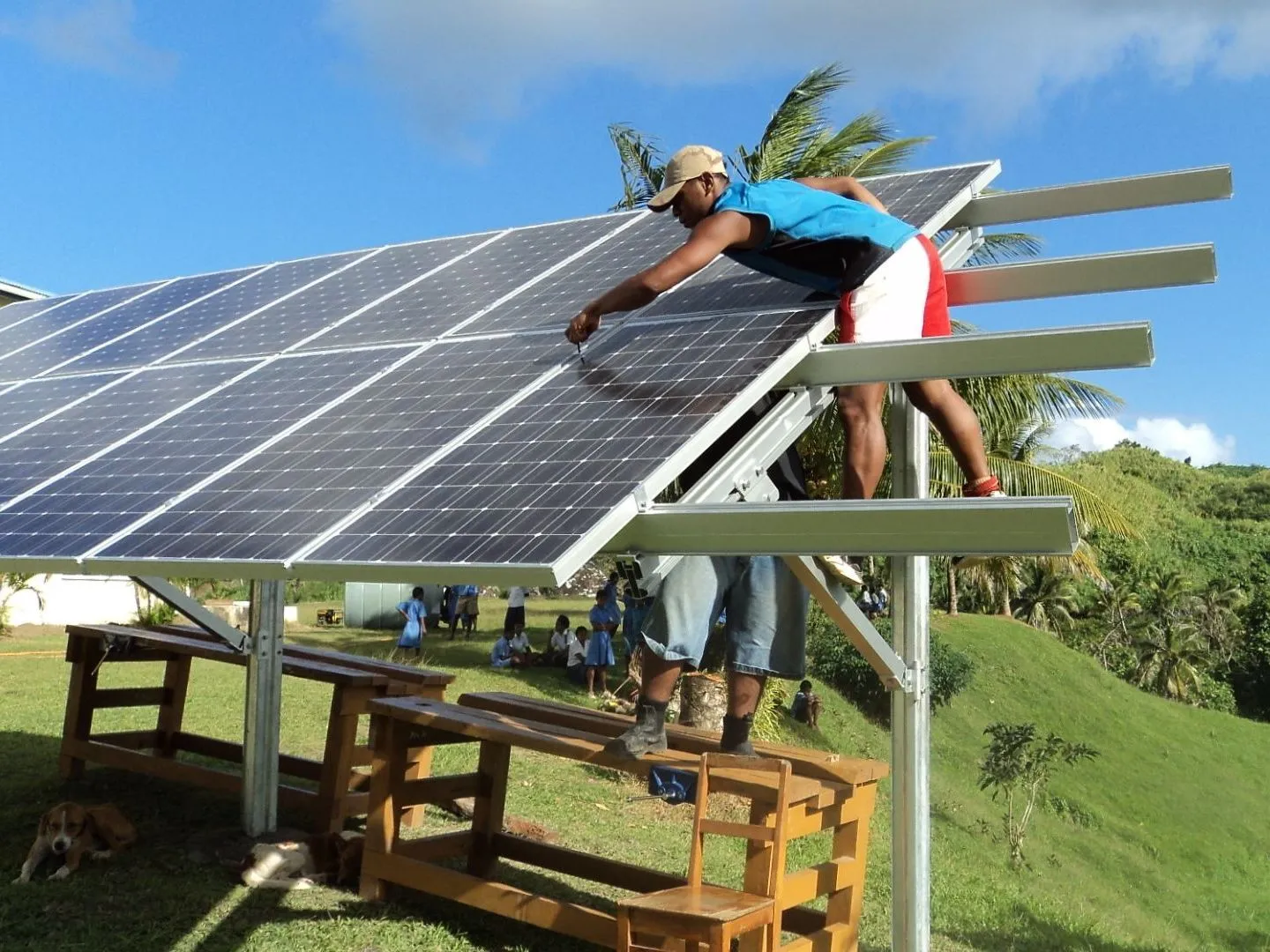
An installer leans across the top of a ground-mounted solar array to fix a panel in place, students in uniform watching from the grass below

Funds were raised progressively, enough to manage one or two projects at a time.

Rotary clubs across Australia backed us throughout the decade, and Fiji Water funded five projects around the middle of it.

Individual sponsors, 1% for the Planet contributors, raffles and events added further support.

Students in bright blue uniforms crowd together in front of their school's solar array, many of them smiling at the camera

A key goal was building strong relationships with equipment suppliers and manufacturers, and it paid off.

Clenergy, whose founder Rob met in 2009, provided the mounting systems for every installation, while SMA, other inverter companies and various panel manufacturers contributed equipment.

That support made our installations significantly cheaper than standard market rates, and it stretched every dollar raised further.

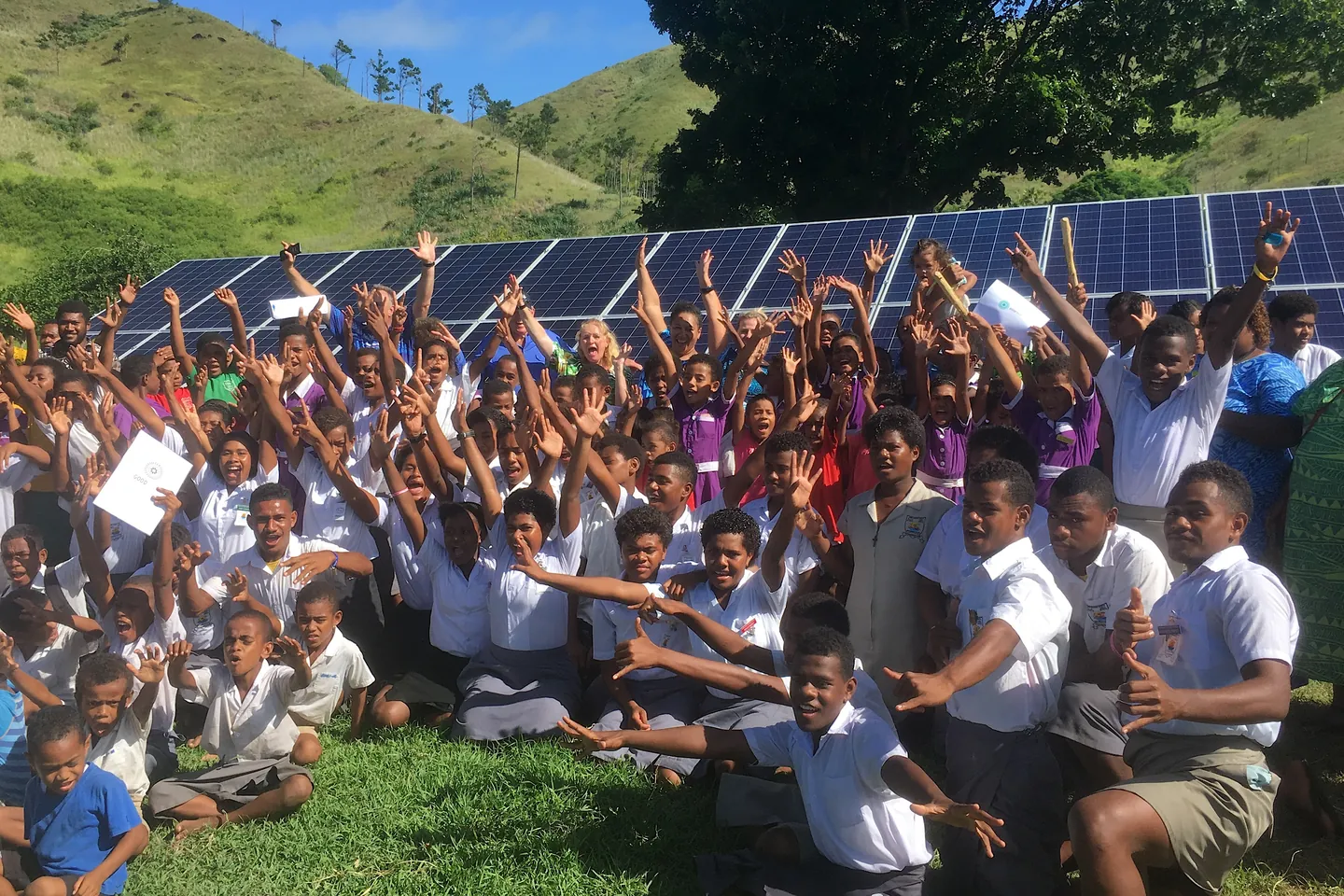
Students in white and purple school uniforms cheer with their arms raised in front of a large solar array, with green hills and a big tree behind them
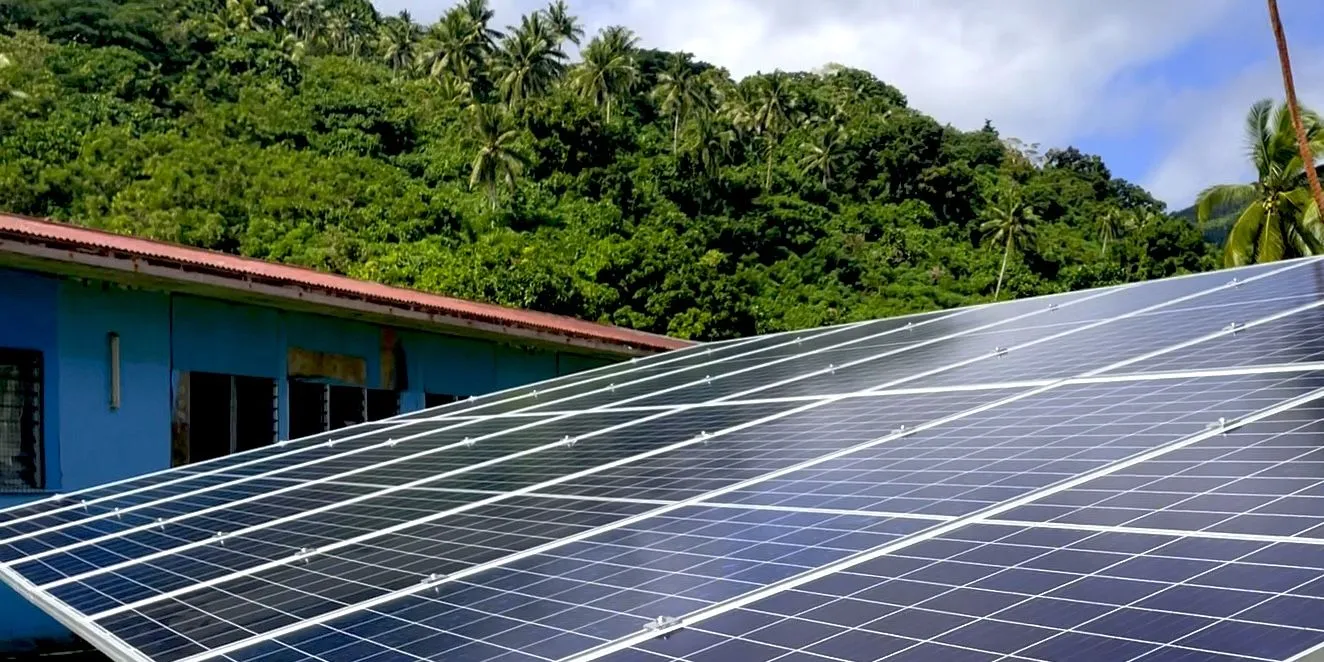
A school building and its solar array below forested hills

Chapter 3, 2019–2026

Scaling up

2019:Seven schools at once

A major scale-up

In 2019, an international sponsor, who has asked to remain anonymous, funded seven projects, our first substantial scaling. COVID intervened, and we delivered the projects at the end of the pandemic.

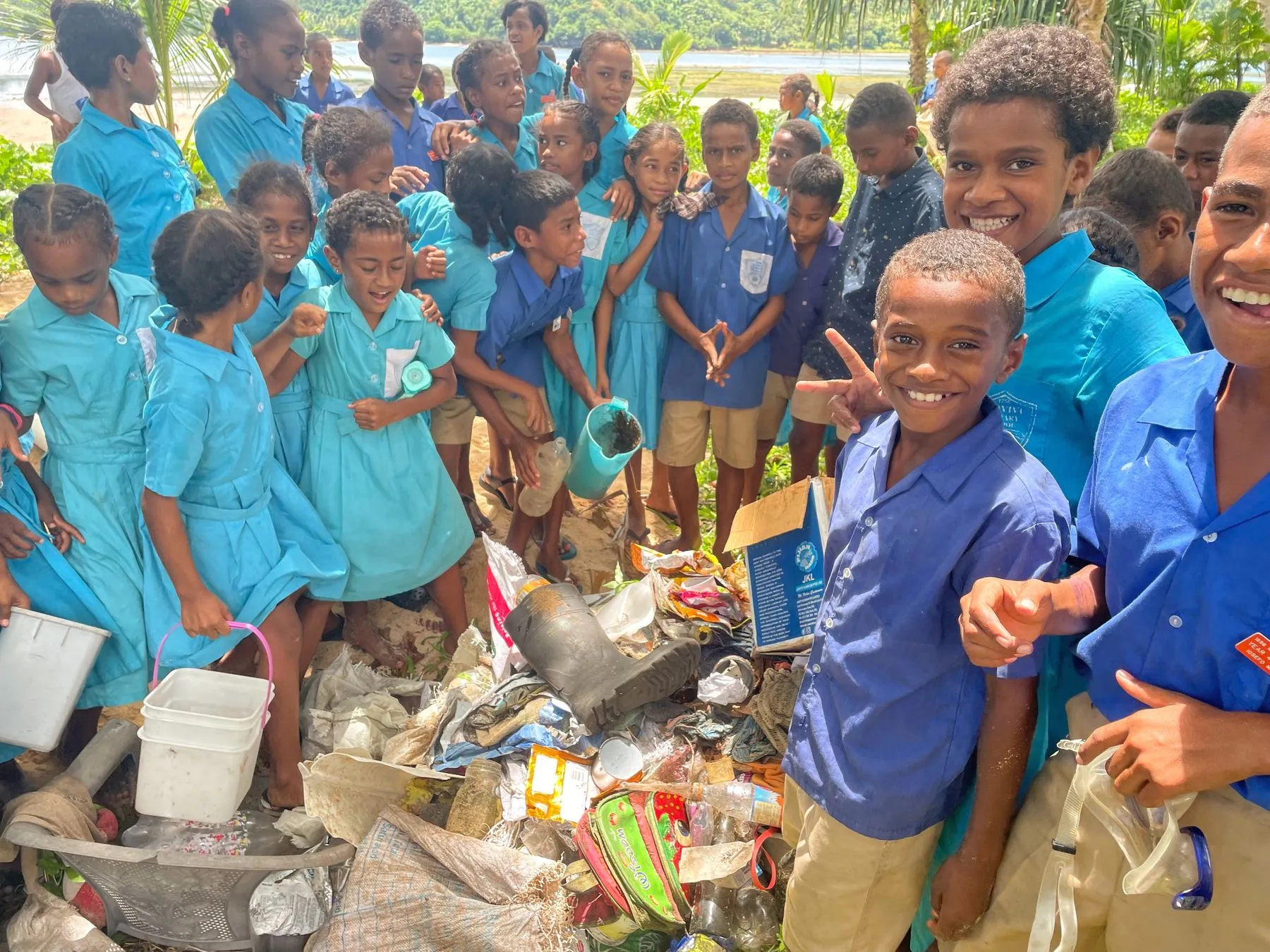
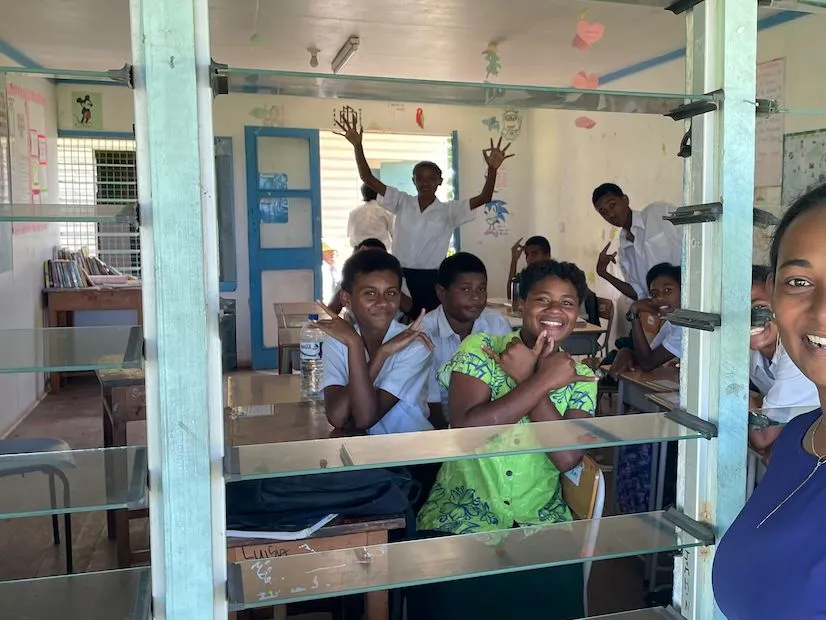
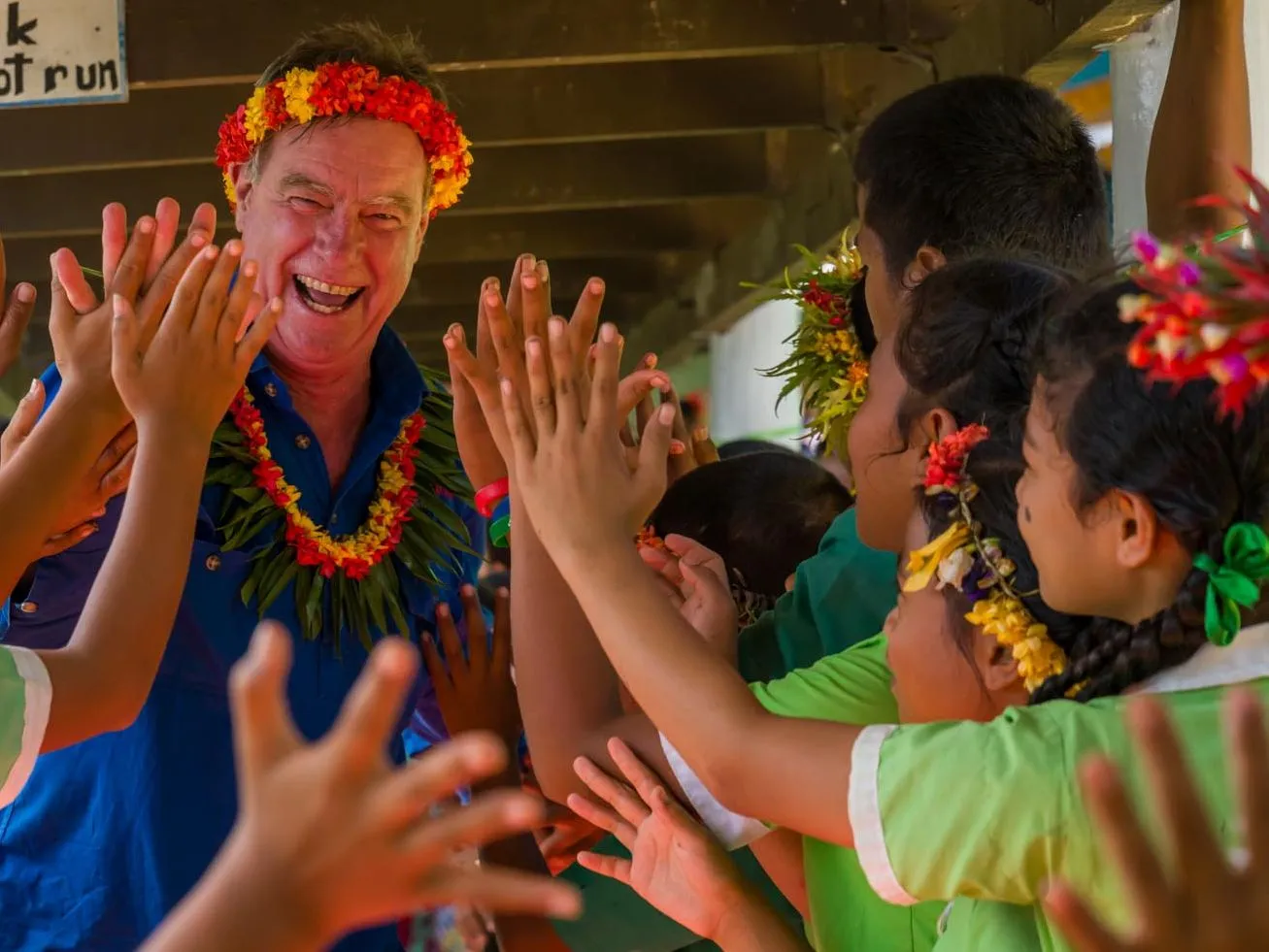
Students with the plastic they collected around their schoolStudents waving from inside their classroomStudents in flower garlands reaching up to high-five a visitor

Watch our short film on the seven projects

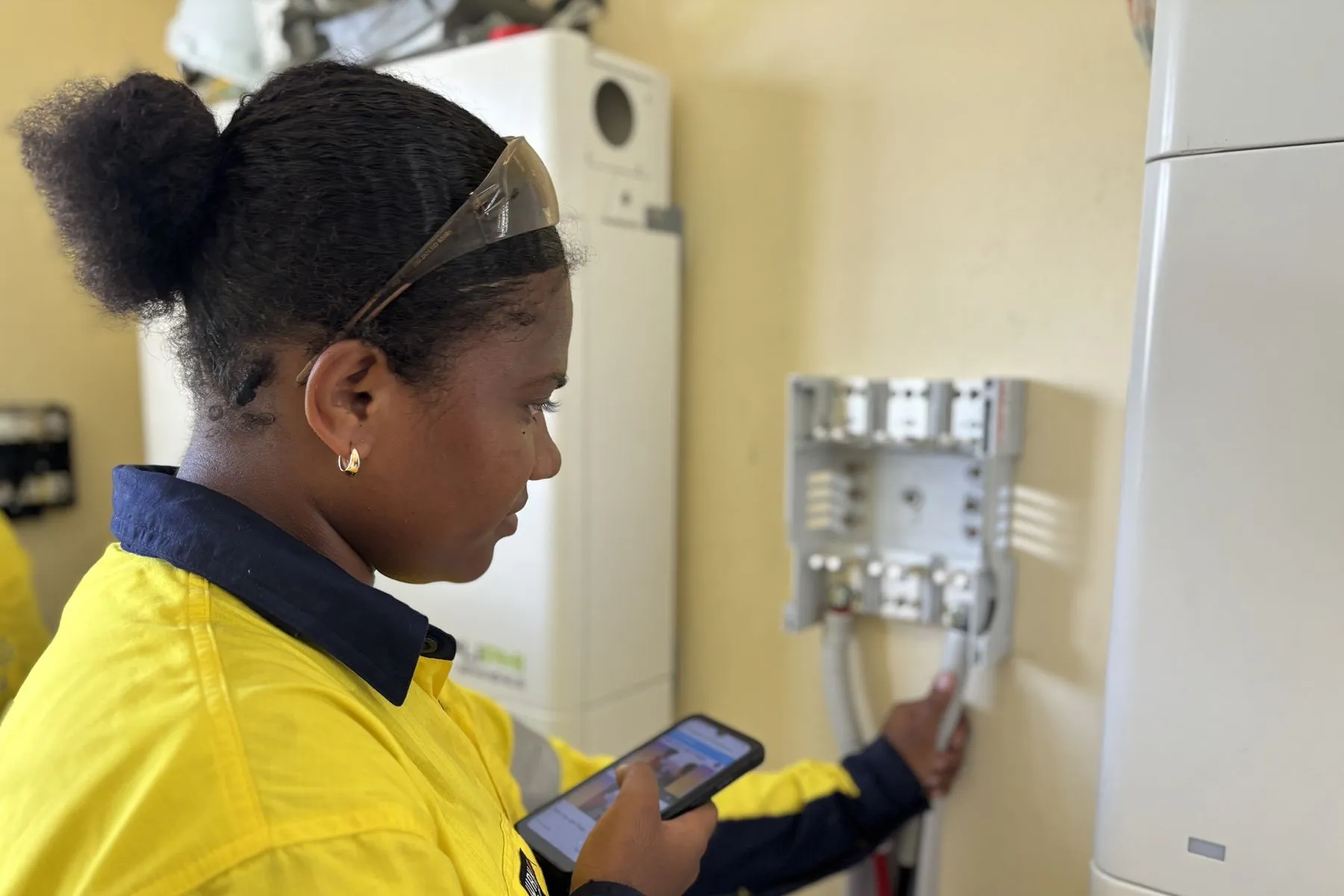
A technician in high-visibility workwear checking a switchboard against readings on her phone

2024:The Solar Fund (Fiji)

Learning to look after what we build

With maintenance demands growing beyond our capacity, we paused to build The Solar Fund (Fiji) – the first independent, protected maintenance fund for small-scale infrastructure in the South Pacific.

At the same time, we started development on the ITF Hub - an online quality control platform tracking 130+ items on each install - assuring standards are met - and providing monitoring and term reporting for schools.

2024:Buakonikai Primary School, Rabi Island

The blueprint for scale

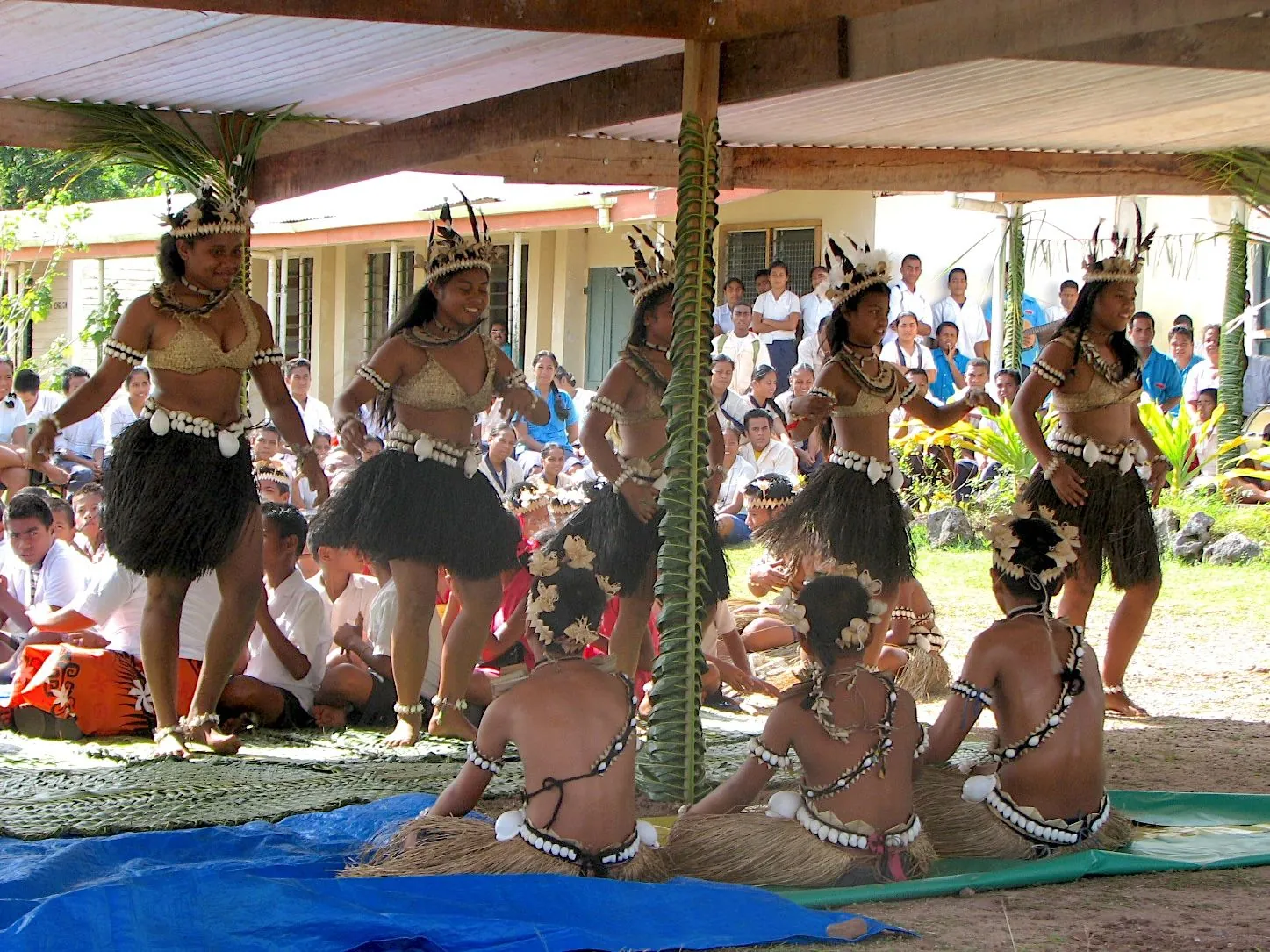
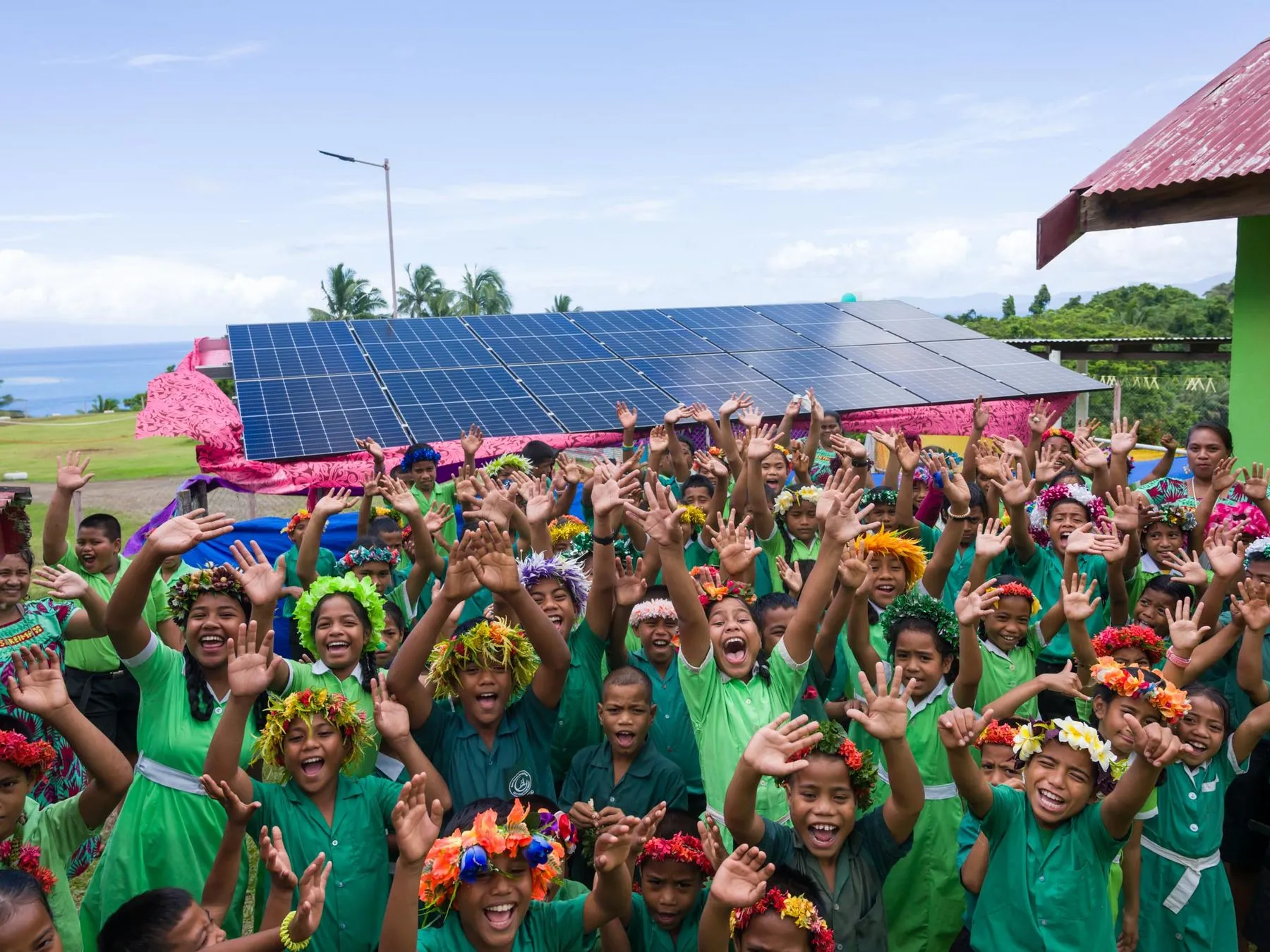
Dancers in shell-and-feather headdresses and fibre skirts perform on woven mats beneath a timber shelter, young dancers seated in the foreground and students watching from behindStudents cheering in front of their school’s rooftop solar array

Two schools on Rabi Island, sixteen years apart.

A pilot at Buakonikai Primary School, backed by the Australian Government with anonymous cofunding and generous donor support, brought solar power and internet connectivity to this remote school on Rabi Island, the same island where our first project began sixteen years earlier. The first inductee into The Solar Fund (Fiji), it became the blueprint for a bigger Australian Government funded project...

2025:REnew Pacific funding

Scaling the model

Led by ITF with Fiji’s Ministry of Education, and backed by A$4 million from the Australian Government’s REnew Pacific program and an anonymous international donor, a project to bring reliable 24-hour solar power to 33 remote schools and teachers’ homes is nearing completion at the close of 2026.

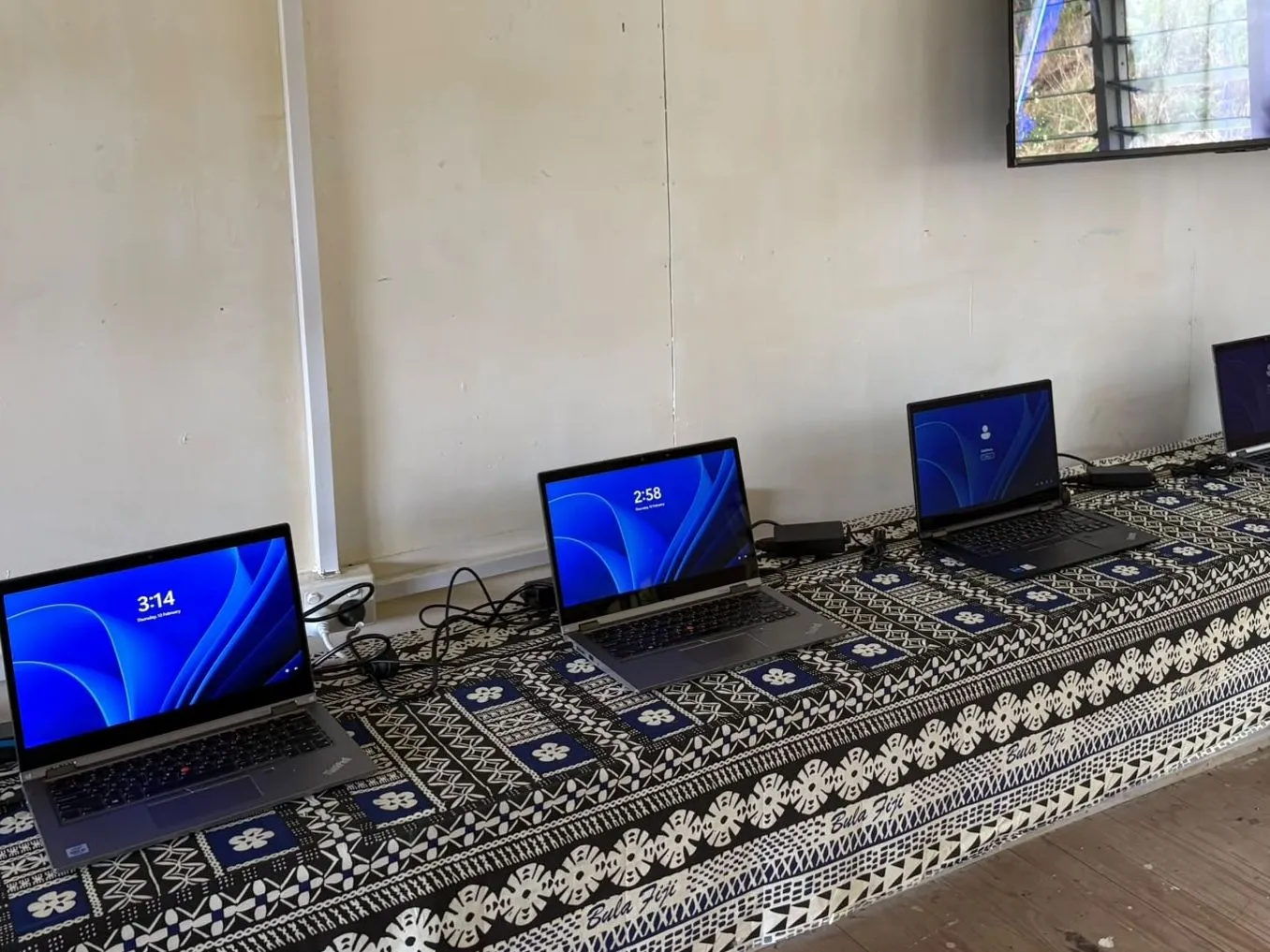
With installs across Kadavu, Gau, the Yasawa Islands, Viti Levu, Kabara, Nairai, Taveuni, Mana, Qamea, Vanua Levu and Vatulele, each school gets high-speed internet and a small computer lab. The systems are sized for energy needs through 2035 and beyond, and The Solar Fund (Fiji) supports their long-term maintenance.

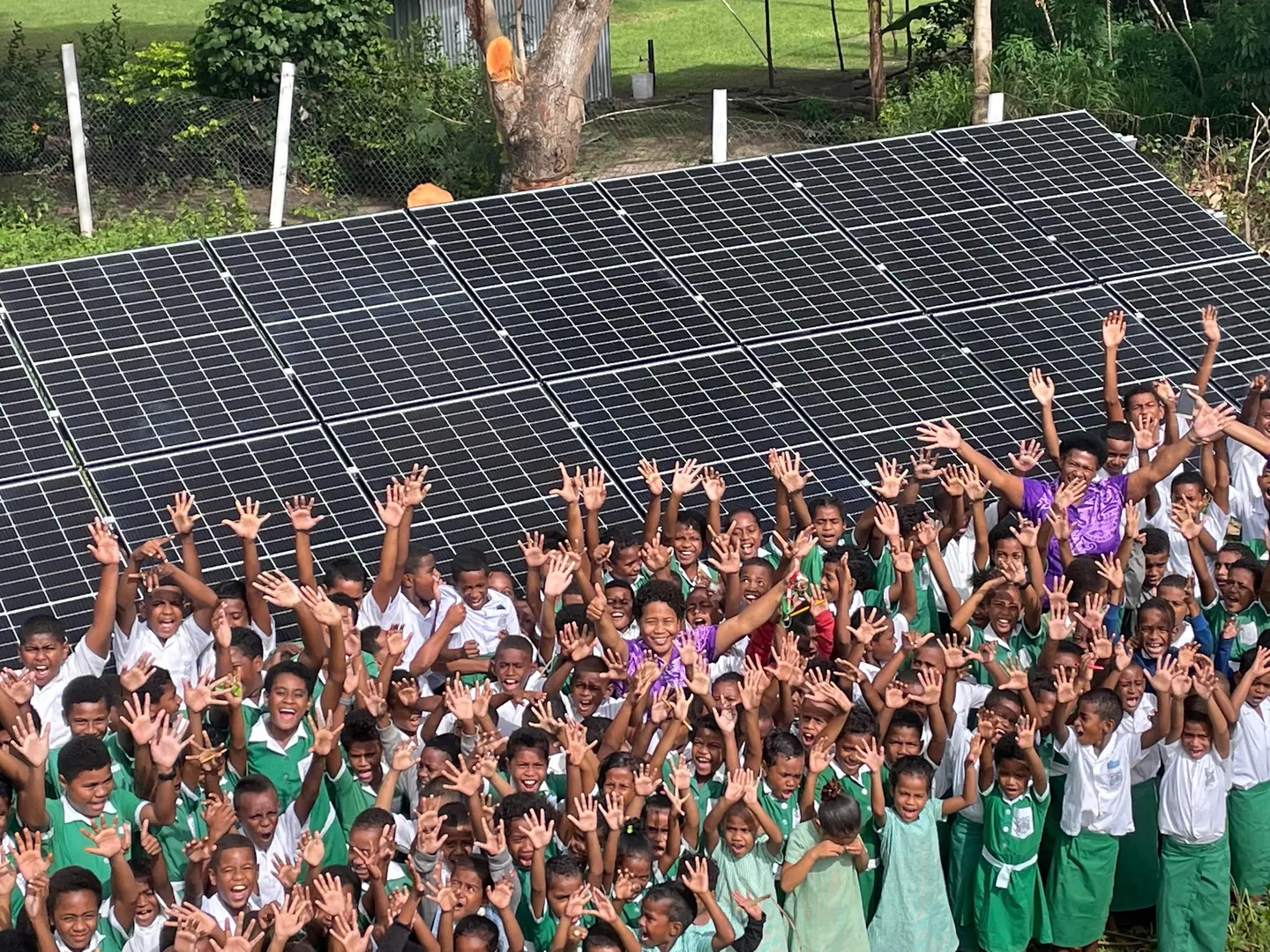
Students in green and white uniforms crowd together with their hands in the air in front of a large ground-mounted solar array, two adults in purple shirts among them
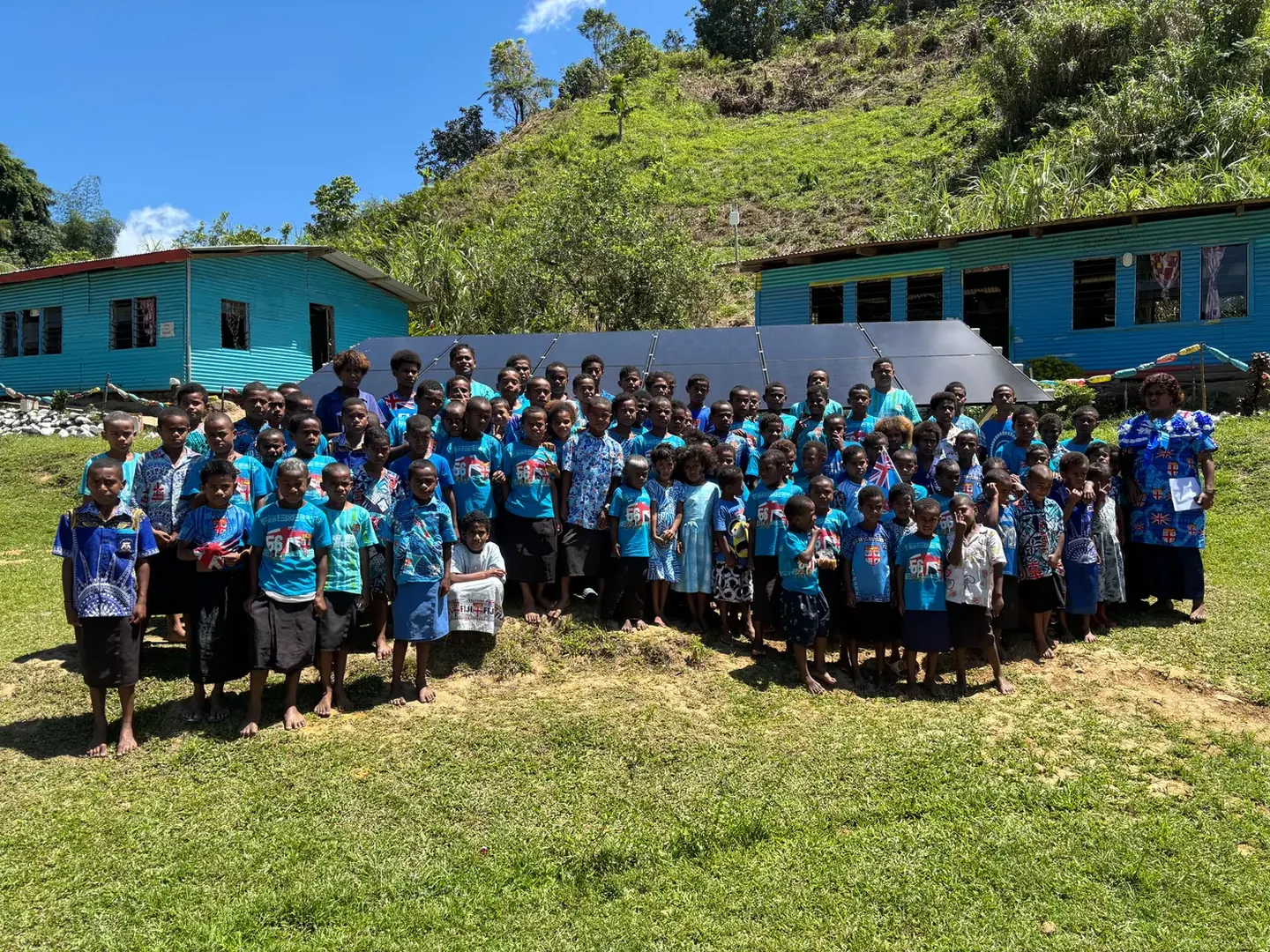
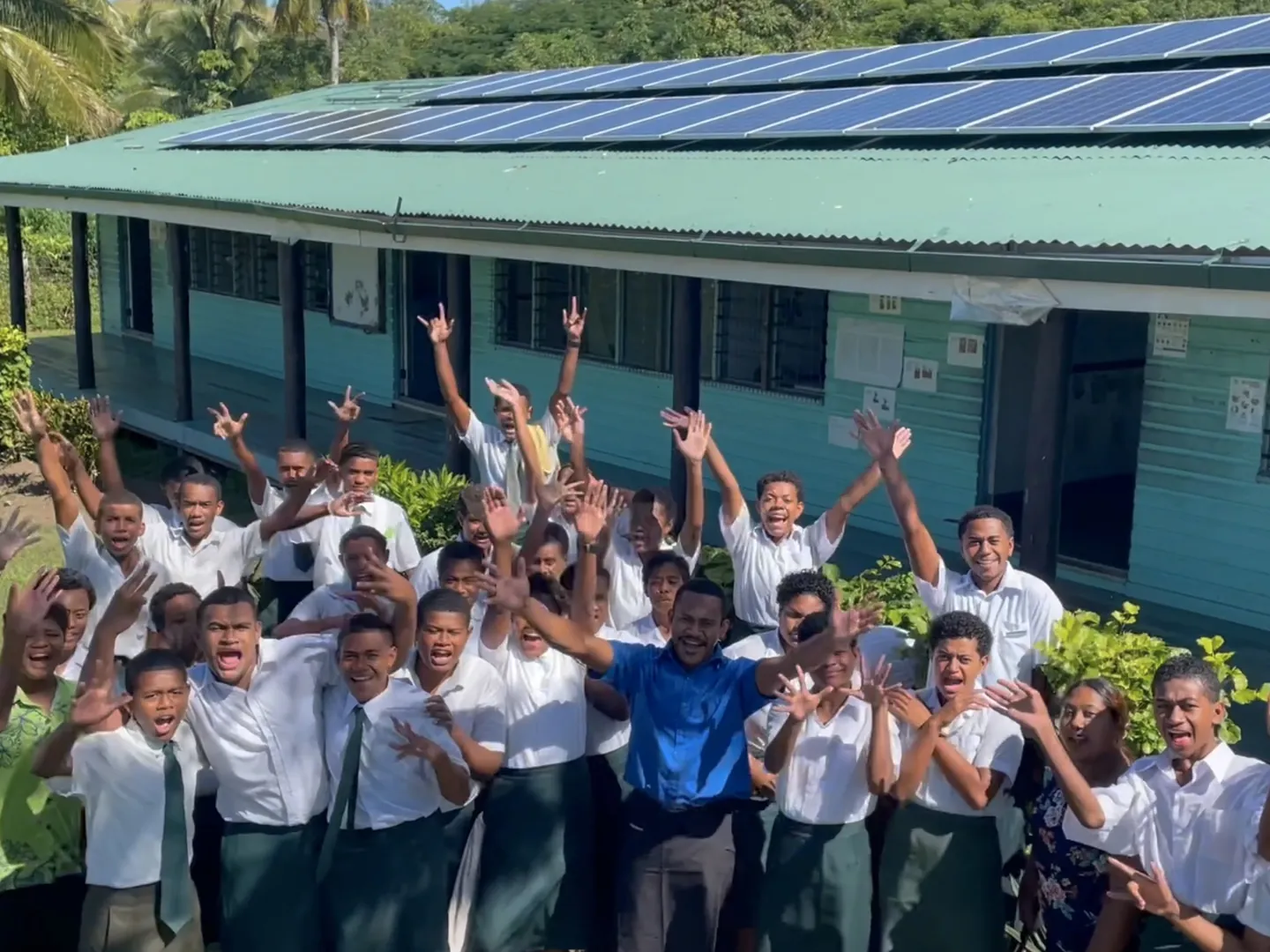
Students in bright blue T-shirts and island-print shirts stand together on the grass in front of a solar array, two blue timber school buildings and a green hillside behind themLaptops set out on a table in a school computer lab, a screen on the wall aboveStudents in white shirts and green skirts cheer with their arms raised in front of a school building with solar panels along its roof, a teacher in a blue shirt among them
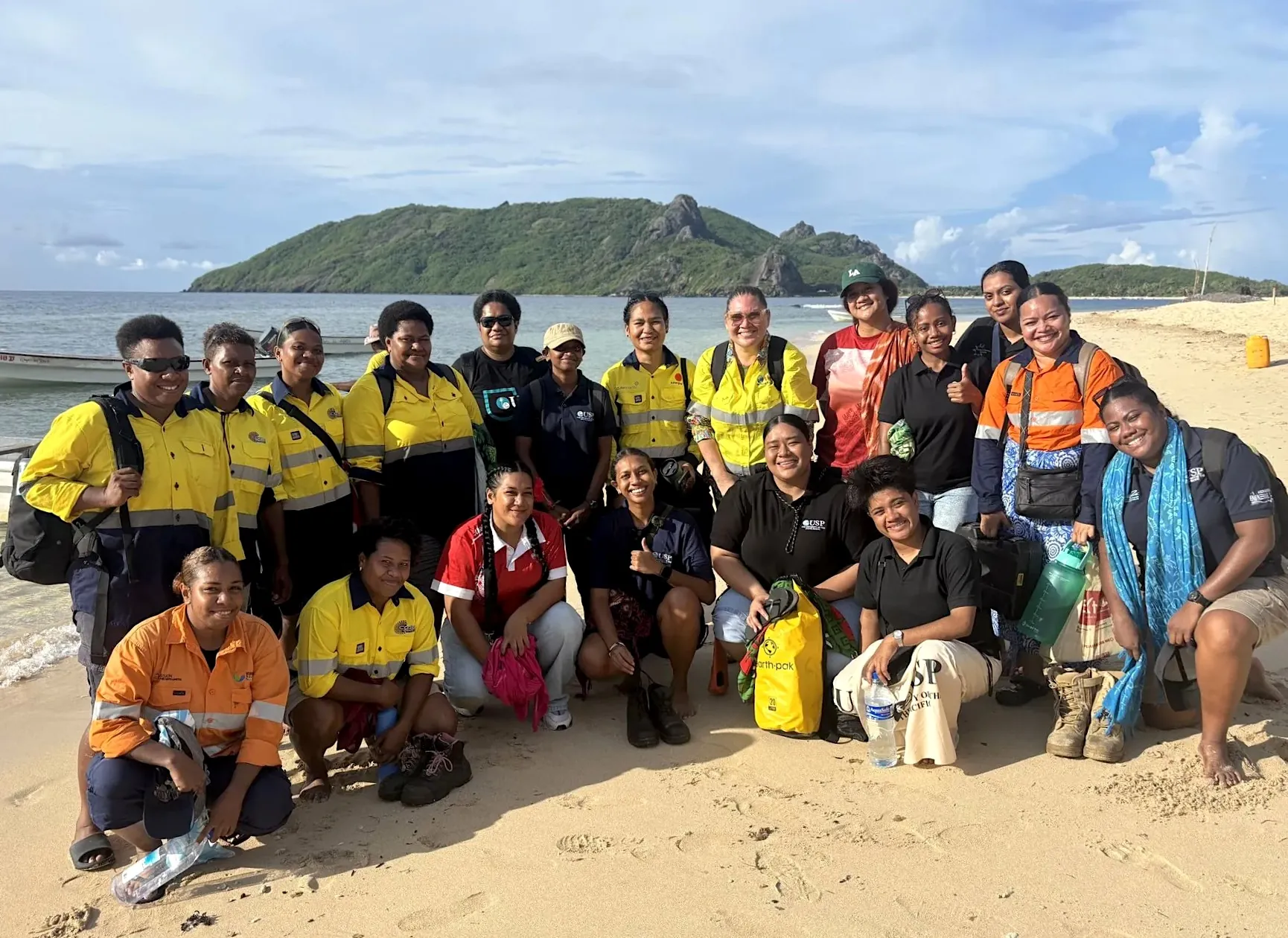
A group of women in high-visibility work shirts and polo shirts pose together on a sandy beach, a green island rising behind them across the water

2026:Promoting women in solar

An all-women crew on Waya Island

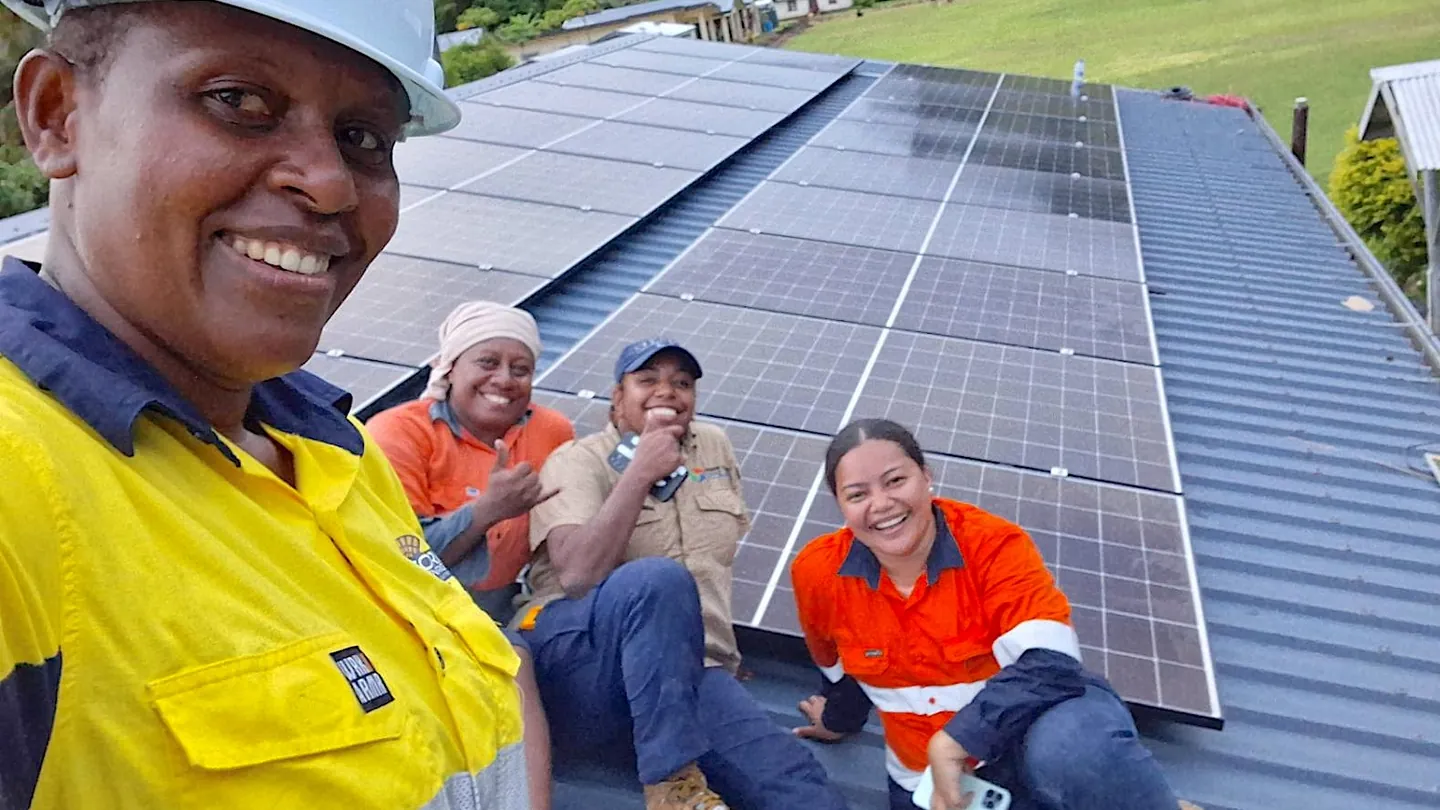
Building women’s skills in solar is an ongoing ITF initiative to grow capacity across the region. In March 2026, University of the South Pacific engineering students, solar technicians and managers, all women, installed an off-grid system at Ratu Naivalu Memorial School on Waya Island. It now powers four school buildings, ten teachers’ homes and three hostels. It was our first installation carried out by an all-women crew, thought to be a first for the region.

Four women in work gear sit on a corrugated iron roof beside a solar array, smiling for a selfie taken by the woman in the foreground in a white hard hat and yellow high-visibility shirt

2026:REnew Pacific, round two

Thirteen more schools

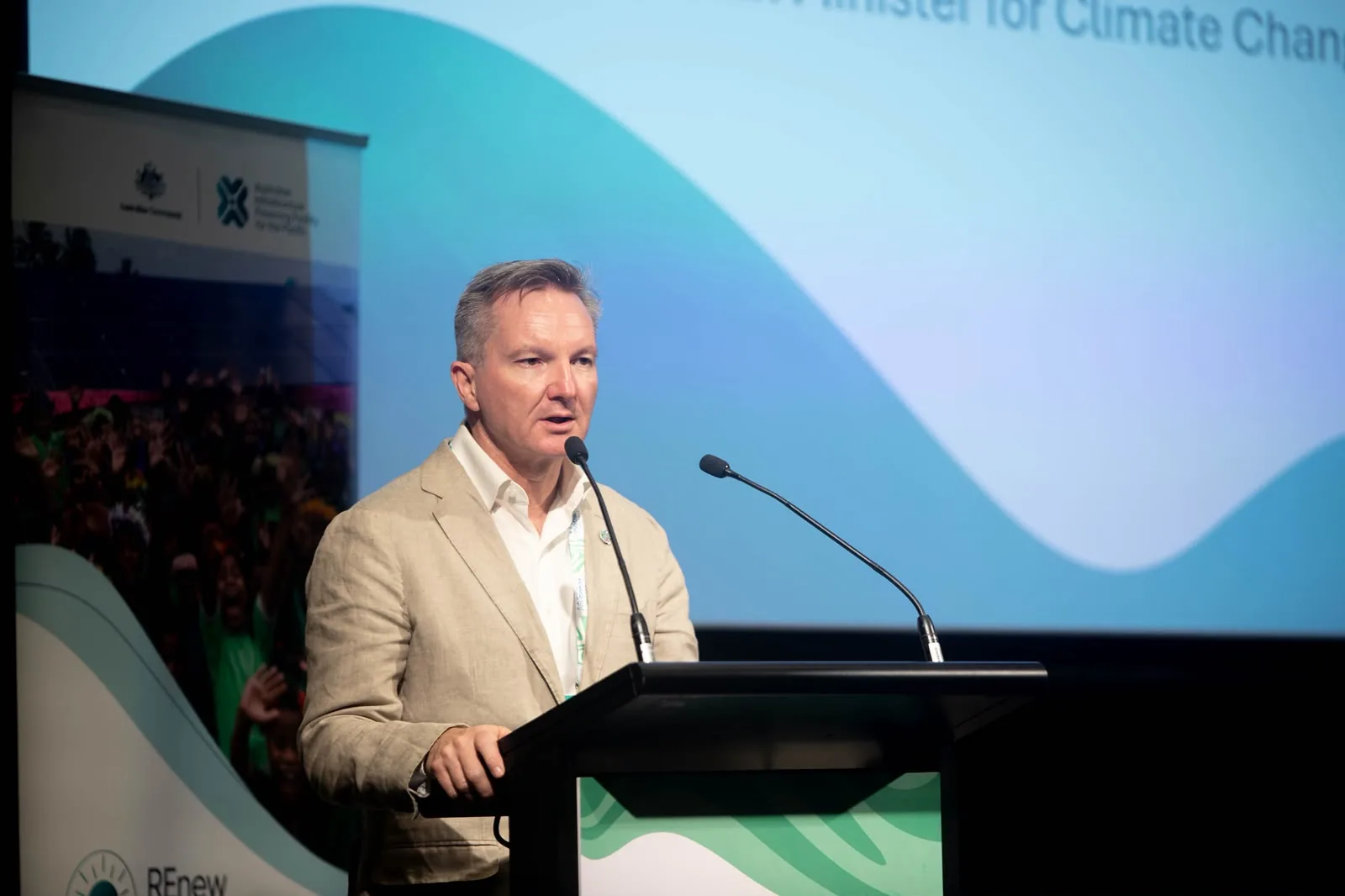
Building on the first REnew Pacific project, Australian Federal Minister for Climate Change and Energy, Chris Bowen, announced further funding for 13 more schools in October 2026 at the Pre-COP31 meeting in Nadi, Fiji.

Like the previous REnew project, as well as solar systems with battery storage, each school will also receive Starlink internet, laptops and smart TVs, benefiting more than 1,200 students annually.

Chris Bowen at Pre-COP31 2026

Your support makes a real difference. Every dollar counts.

Donate now